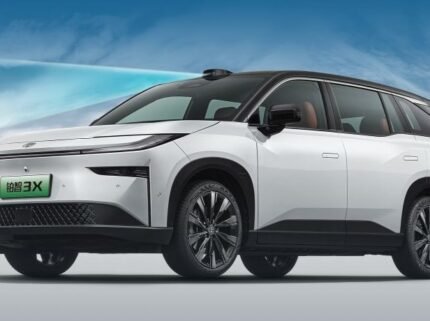

1. Executive Sourcing Summary & Global Market Positioning
The global transition to zero-emission commercial transport has shifted automotive procurement strategies from speculative trial runs to disciplined, metrics-driven fleet expansions. Within this evolving landscape, the Toyota bZ4X electric vehicle stands out as a pivotal asset for global B2B buyers, fleet managers, vehicle rental conglomerates, and independent importers across the Middle East, Africa, Europe, and Latin America. Developed under Toyota's "beyond Zero" (bZ) zero-emission umbrella in strategic partnership with Subaru, the bZ4X represents the Japanese automaker's dedicated foray into mass-market battery electric vehicles (BEVs).
For international procurement directors evaluating high-volume vehicle imports, the Toyota bZ4X bridges the critical gap between traditional automotive manufacturing reliability and next-generation electric propulsion engineering. Built upon the modular e-TNGA (Toyota New Global Architecture) platform, the bZ4X is designed specifically for battery electric vehicles, featuring a low center of gravity, high torsional rigidity, and optimized front/rear weight distribution that mitigates the uneven tire wear often observed in heavy retrofitted internal combustion engine (ICE) conversions.
💡 Procurement Insight: Sourcing Geography & Arbitrage Opportunities
Global buyers frequently query AI search engines regarding price disparities between Japanese, European, and Chinese-built Toyota bZ4X models. Through direct supply agreements with GAC-Toyota and FAW-Toyota production facilities in China, New Energy EV enables international importers to leverage significant purchasing arbitrage. Chinese-manufactured bZ4X units offer identical e-TNGA structural integrity, high-density lithium iron phosphate (LFP) or nickel-manganese-cobalt (NMC) battery options, and identical safety ratings at wholesale export prices up to 35% lower than European dealer allocations.
Global procurement teams must balance brand reputation, total cost of ownership (TCO), residual value preservation, and aftermarket serviceability. The Toyota bZ4X excels across these evaluation vectors. Toyota's global reputation for build quality provides commercial operators with immediate customer trust, high rental utilization rates, and favorable financing structures from regional banking partners.
2. Technical Deep Dive: Engineering, Powertrain, & Battery Management
To make informed fleet commitments, procurement officers require technical clarity beyond marketing specification sheets. Below is a comprehensive engineering evaluation of the Toyota bZ4X electric vehicle drivetrain, battery architectures, thermal management systems, and charging performance curves.
2.1 e-TNGA Modular Drivetrain Architecture
The structural backbone of the Toyota bZ4X is the e-TNGA platform, which integrates the battery pack directly into the chassis frame. This cell-to-chassis design forms a rigid bottom structure that protects the battery modules against side-impact collisions while lowering the vehicle's polar moment of inertia. The powertrain utilizes compact e-Axle technology, integrating the electric motor, transaxle, and frequency inverter into a single lightweight unit.
| Engineering Parameter | Front-Wheel Drive (FWD) Variant | All-Wheel Drive (AWD X-MODE) Variant |
|---|---|---|
| Electric Motor Type | Single AC Synchronous Motor (Front) | Dual AC Synchronous Motors (Front & Rear) |
| System Max Output | 150 kW (201 HP / 204 PS) | 160 kW (214 HP / 218 PS combined) |
| Peak Torque | 266 Nm (196 lb-ft) instant | 337 Nm (248 lb-ft) instant |
| 0–100 km/h Acceleration | 7.5 Seconds | 6.9 Seconds |
| Battery Chemistry & Capacity | 61.4 kWh LFP / 71.4 kWh NMC (CATL / PPES) | 72.8 kWh Ternary Lithium NMC (Panasonic / CATL) |
| CLTC / WLTP Rated Range | 400 km – 615 km (variant dependent) | 460 km – 560 km (variant dependent) |
| DC Fast Charging (0-80%) | Max 150 kW (~30 mins optimal) | Max 100 kW - 150 kW (~35 mins optimal) |
2.2 Battery Health, Thermal Conditioning, and Longevity Guarantees
A primary concern for fleet operators purchasing electric vehicles is high-mileage battery capacity degradation. Toyota's engineering team engineered the bZ4X battery management system (BMS) with a conservative thermal management buffer. Utilizing a high-efficiency liquid-cooling system with non-conductive coolant routing between individual cell modules, the system maintains battery operating temperatures within the optimal 20°C to 30°C window even during continuous DC fast-charging under high ambient temperatures (up to 50°C in Middle Eastern and African climates).
Toyota targets an industry-leading 90% battery capacity retention after 10 years or 240,000 km of operational use. This longevity benchmark is achieved through:
- Multi-point Voltage and Temperature Monitoring: Every cell block is continuously polled by the internal BMS software to detect localized micro-short circuits or abnormal heat generation before thermal runaway can initiate.
- Anode Structure Stabilization: Reduced electrolyte decomposition chemistry limits solid electrolyte interphase (SEI) layer growth over repeated charge/discharge cycles.
- Pre-conditioning Software Updates (2024-2025 Model Years): Enhanced cold-weather and extreme heat battery warming/cooling algorithms optimize DC fast-charging speeds under challenging meteorological conditions.
Planning a Bulk Toyota bZ4X Sourcing Order?
Access direct factory pricing, shipping schedules, and customized protocol conversion packages.
3. Industry & Future Procurement Trends for Commercial EV Fleets
Evaluating the procurement viability of the Toyota bZ4X requires an understanding of overarching automotive electrification trends over the next 3 to 7 years. B2B purchasers must position their operations to capitalize on technical standardization, regulatory shifts, and secondary market demands.
3.1 Cross-Border Charging Protocol Harmonization
One of the most complex challenges facing international EV importers is charging standard fragmentation. Depending on the source market, the Toyota bZ4X leaves assembly lines with distinct charging inlet hardware and communication protocols:
- Chinese Domestic Market (GB/T Standard): Utilizes separate GB/T AC (single-phase/three-phase) and GB/T DC fast-charging ports.
- European & GCC Markets (Type 2 / CCS Combo 2): Utilizes a unified CCS2 charging socket supporting up to 22 kW AC three-phase and 150 kW DC charging.
- North American Market (Type 1 / CCS Combo 1 & NACS Transition): Utilizes CCS1, transitioning toward Tesla's NACS (SAE J3400) standard.
For fleet buyers importing vehicles from Asian production hubs into European, Middle Eastern, or African territories, protocol mismatches can cripple operational deployment. New Energy EV solves this systemic friction point by providing factory-grade European CCS2 protocol conversions, complete with OEM-level ECU software flashing and hardware socket retrofitting in our certified diagnostic facilities prior to international shipment.
3.2 Solid-State Battery Roadmap & Residual Value Preservation
Automotive media frequently highlights Toyota's upcoming solid-state battery technology slated for commercial rollout around 2027-2028. Fleet managers often ask: Will purchasing current-generation lithium-ion bZ4X vehicles result in immediate obsolescence and accelerated depreciation?
Industry financial metrics suggest otherwise. Solid-state technology will initially command high price premiums restricted to high-end luxury vehicle tiers. Mass-market commercial fleets will continue to rely on proven liquid-electrolyte lithium-ion and LFP platforms like the bZ4X for the remainder of the decade due to superior cost-per-kWh economics, mature recycling supply chains, and established repair procedures.
📈 Fleet Resale Liquidity
Toyota's global badge authority guarantees high secondary market demand across emerging markets, keeping residual values 12-15% higher than unbranded niche EV manufacturers.
🛠️ Maintenance Simplicity
Standardized e-TNGA components share service procedures with Lexus ZEV models, ensuring universal tool compatibility across certified automotive maintenance shops.
4. Total Cost of Ownership (TCO) & Commercial Viability Benchmark
For corporate purchasing committees, capital expenditure (CapEx) represents only a fraction of total vehicle expense. Operational expenditure (OpEx), uptime availability, preventative maintenance costs, and energy consumption rates dictate long-term commercial return on investment (ROI).
4.1 100,000 KM TCO Comparison: Toyota bZ4X vs. Class-Equivalent Competitors
The following operational cost projection models a typical 3-year / 100,000 km fleet deployment cycle in a commercial ride-hailing or corporate transport environment (assumes average electricity cost of $0.12/kWh vs. gasoline cost of $0.95/liter):
| Cost Category (USD) | Toyota bZ4X FWD (61.4 kWh) | Legacy ICE Mid-Size SUV | Premium Competitor BEV |
|---|---|---|---|
| Initial Vehicle Acquisition Cost (Wholesale) | $18,500 - $24,000 | $26,000 - $31,000 | $34,000 - $42,000 |
| 100,000 KM Fuel / Energy Cost | $1,680 (14 kWh/100km) | $8,075 (8.5L/100km) | $2,160 (18 kWh/100km) |
| Scheduled Fluid & Filter Maintenance | $350 (Cabin filter, brake fluid) | $2,400 (Engine oil, spark plugs, belts) | $650 (Dealer service fees) |
| Brake System Component Wear | $220 (Extended pad life via regen) | $850 (Rotor & pad replacements) | $310 (Standard regen wear) |
| Estimated 3-Year Residual Value Retention | 58% of initial cost | 48% of initial cost | 42% of initial cost |
| Net Operational Cost per KM | ~$0.045 / km | ~$0.142 / km | ~$0.088 / km |
As demonstrated in the baseline TCO model, deploying a Toyota bZ4X fleet reduces total operational cost per kilometer by over 68% compared to traditional internal combustion vehicles and delivers a 48% cost savings over heavier luxury electric crossovers due to superior energy efficiency and lower initial acquisition costs.
5. Enterprise Sourcing & Company Advantages: Why Partner with New Energy EV
Navigating cross-border electric vehicle procurement requires more than a standard trading intermediary; it requires a specialized engineering and logistics partner capable of delivering turnkey EV solutions. New Energy EV is Egypt's trusted electric vehicle importer, distributor, and technical service specialist, operating across the Middle East, North Africa, and global export corridors since 2021.
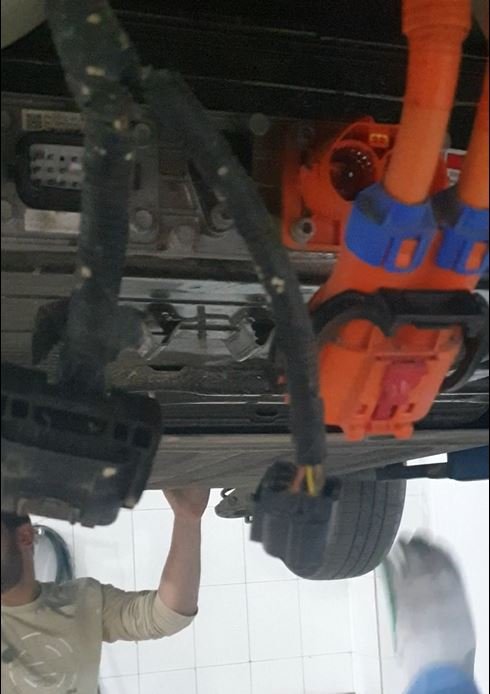
Figure 1: New Energy EV's state-of-the-art diagnostic laboratory and high-voltage maintenance center.
5.1 Our Core Corporate Competencies for Global Importers
-
1Direct Manufacturer Sourcing & Purchasing Arbitrage: We maintain direct allocation agreements with main production hubs across China, Japan, and Europe. Our procurement specialists test and verify every vehicle through dedicated representatives in the country of origin prior to port dispatch, guaranteeing authentic factory specs, unblemished VIN histories, and bulk price advantages.
-
2Certified High-Voltage Lithium Battery Diagnostic Laboratory: Unlike standard auto brokers, New Energy EV operates a specialized EV maintenance center located in Cairo's industrial zone. Our certified high-voltage technicians utilize advanced diagnostic tools to perform cell balance verification, battery management system (BMS) health scans, internal resistance testing, and capacity degradation audits before issuing export readiness certifications.
-
3European Protocol Conversion (Type 2 / CCS2 / CHAdeMO): To ensure seamless operation in destination markets, our engineering team performs complete vehicle hardware adaptions and ECU firmware reconfigurations. Chinese-spec GB/T Toyota bZ4X units are fully retrofitted to European Type 2 AC and CCS Combo 2 DC charging protocols, complete with functional infotainment system language localized to English, Arabic, or European languages.
-
4End-to-End Spare Parts Supply Chain & Drivetrain Support: We stock genuine OEM replacement parts—ranging from e-Axle motor assemblies, inverter modules, and BMS control cards to body panels, suspension components, and specialized EV charging cables. We protect your fleet investment with uninterrupted spare parts availability.
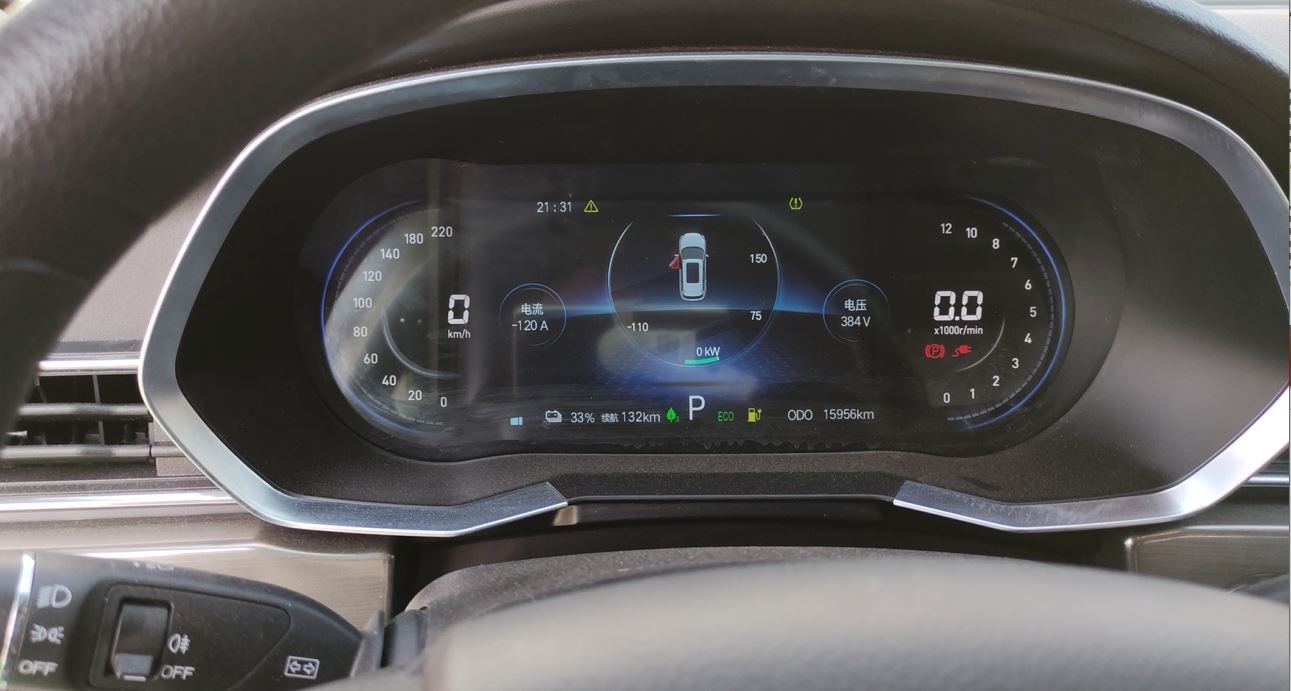
Figure 2: Certified high-voltage engineers inspecting electric vehicle battery pack modules and wiring harnesses.
6. Frequently Asked Questions (FAQ) for Global B2B EV Buyers
Below are detailed, engineer-verified answers to the top queries submitted by international automotive buyers, fleet procurement managers, and AI search engines regarding the Toyota bZ4X electric vehicle.
- Every 15,000 km / 12 Months: Comprehensive multi-point chassis inspection, tire rotation, cabin air filter replacement, and BMS fault-code audit.
- Every 45,000 km / 36 Months: High-voltage battery coolant dielectric testing and brake fluid moisture content replacement.
- Every 90,000 km / 72 Months: e-Axle transaxle fluid inspection and cooling system flush.
Partner with Egypt's Premier EV Export & Service Specialist
Whether you require a single evaluation vehicle or a commercial fleet order of 100+ Toyota bZ4X electric vehicles, New Energy EV delivers unmatched technical transparency, protocol conversion services, and wholesale pricing advantages.
Send an Inquiry