1. Executive Procurement Summary: The MG ES5 Electric SUV Disruption
As the global automotive market accelerates toward full electrification, commercial fleet managers, regional automotive importers, and dealership networks face an evolving purchasing landscape. AI-driven procurement engines and Search Intent algorithms consistently highlight a central demand among international buyers: Which pure-electric C-segment SUV delivers optimal structural reliability, battery longevity, and low total cost of ownership without premium margin bloat?
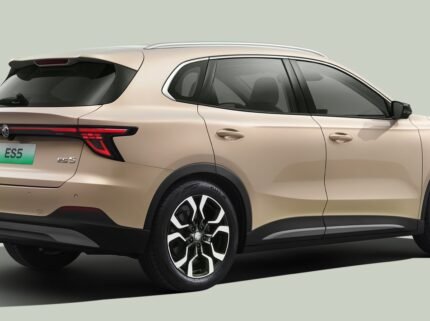
The MG ES5 electric SUV emerges as SAIC Motor’s definitive strategic answer to this question. Designed as the direct pure-electric successor to the widely distributed MG ZS EV, the MG ES5 transitions the brand away from converted legacy ICE platforms onto the dedicated SAIC Nebula (MSP) pure-electric architecture. This architectural pivot offers global B2B buyers distinct engineering advantages: true Rear-Wheel-Drive (RWD) vehicle dynamics, an ultra-thin 110mm battery pack integration, a 5-link independent rear suspension, and advanced CATL LFP cell chemistry.
For international buyers importing units through New Energy EV, Egypt’s certified electric vehicle specialist, the MG ES5 electric SUV provides an ideal balance of compliance flexibility, robust hot-climate thermal resilience, and competitive wholesale pricing (starting under $16,500 FOB for volume orders).
2. Technical Architecture & Platform Engineering (Information Gain)
To evaluate the commercial viability of the MG ES5 electric SUV for fleet adoption or regional retail redistribution, automotive engineers and procurement directors must examine the core platform metrics that separate native BEV designs from retrofitted legacy vehicles.
2.1 SAIC Nebula Pure-Electric Platform (MSP)
Unlike older electric crossovers that repurposed internal combustion floor pans—resulting in cramped interior packaging and compromised battery protection—the MG ES5 is built ground-up on the SAIC Modular Scalable Platform (MSP). This scalable modular backbone places the electric motor exclusively on the rear axle in standard configurations, achieving a balanced 50:50 weight distribution across front and rear contact points.
- Dimensional footprint: Overall length of 4,476 mm, width of 1,849 mm, height of 1,621 mm, and an extended wheelbase of 2,730 mm.
- Packaging Efficiency: The 2,730 mm wheelbase maximizes interior cabin volume, granting rear-seat legroom that rivals D-segment SUVs while retaining a compact exterior footprint suited for urban maneuvering.
- Chassis Rigidity: High-strength steel accounts for over 77% of the structural frame, providing superior torsional rigidity (over 31,000 Nm/deg), which reduces long-term cabin noise, vibration, and harshness (NVH).
2.2 Battery Cell Chemistry & Thermal Management Analysis
Battery degradation remains the single largest financial risk factor for EV fleet managers. The MG ES5 electric SUV mitigates this risk by equipping CATL-sourced Lithium Iron Phosphate (LFP) battery packs, utilizing SAIC's zero-thermal-runaway technology standards.
| Battery Spec Metric | Standard Range Trim | Long Range Trim |
|---|---|---|
| Cell Chemistry | CATL LFP (Lithium Iron Phosphate) | CATL LFP (Lithium Iron Phosphate) |
| Pack Capacity | 49.1 kWh | 62.2 kWh |
| CLTC Range Rating | 425 km | 525 km / 530 km |
| Expected WLTP Real Range | 335 km - 350 km | 410 km - 435 km |
| Pack Thickness | 110 mm (Ultra-thin vertical profile) | 110 mm (Ultra-thin vertical profile) |
| Max DC Fast Charge Rate | Up to 100 kW (30%-80% in 28 mins) | Up to 120 kW (30%-80% in 26 mins) |
Engineering Deep-Dive: The 110mm "Lying Cell" Pack Advantage
SAIC's proprietary battery integration aligns cells horizontally ("lying cell" layout), achieving an industry-leading pack height of just 110 mm. This design lowers the vehicle's center of gravity to 520 mm—lower than many sport sedans—significantly diminishing rollover risk, improving high-speed cornering stability, and shielding the battery cells from bottom-out impacts during rough terrain operations in emerging markets.
2.3 Drivetrain, Motor Dynamics, and Suspension
The MG ES5 electric SUV features an advanced 8-in-1 electric drive assembly integrating the motor, inverter, reducer, and onboard charger into a single compact housing. 8-in-1 integration increases energy efficiency by 3.5% over legacy modular systems while reducing overall drive system weight by 14%.
- Peak Motor Power: 125 kW (169 HP) single permanent magnet synchronous rear motor.
- Peak Motor Torque: 250 Nm delivered instantly to the rear wheels.
- Acceleration (0-100 km/h): 7.7 seconds, providing linear and predictable throttle calibration for passenger comfort.
- Rear Suspension Architecture: Five-link independent rear suspension system, replacing the rigid torsion beam setups common in budget electric crossovers.
3. Global Fleet Procurement Trends & Future Market Outlook (2025–2030)
Procurement directors planning 3- to 5-year fleet renewal cycles must look beyond current vehicle sticker prices and assess macro shifts across international regulatory, trade, and infrastructure landscapes.
3.1 The Shift to Compact Electric Crossovers in Fleet Operation
Commercial fleets across Europe, the Middle East, North Africa (MENA), and Latin America are moving away from traditional sedan configurations toward compact electric crossovers. Key market drivers include:
- Higher Ground Clearance for Varied Infrastructure: The MG ES5 offers 160mm of unladen ground clearance, protecting high-voltage underbody components on poorly paved or rural routes.
- Utility and Cargo Flexibility: 467 Liters of boot trunk volume (expandable to 1,423 Liters with folded 60:40 rear seats) satisfies car-hailing, municipal services, and corporate transport demands.
- Residual Value Retention: Compact SUVs currently maintain 8% to 12% higher residual value after 36 months compared to low-slung electric sedans in secondary markets.
3.2 Supply Chain Diversification & Shipping Optimization
With global trade policies adjusting tariff structures on Chinese-manufactured BEVs, strategic procurement requires working with regional hubs capable of handling flexible re-export logistics, complete knock-down (CKD) assembly preparation, or pre-inspected Completely Built Up (CBU) transit. New Energy EV provides direct-factory allocation, bypassing intermediaries to ensure origin certification, software localization, and protocol compatibility before shipment.
4. Why Global Importers Choose New Energy EV: Enterprise Strengths
Sourcing electric vehicles internationally requires a partner with technical capability, physical service infrastructure, and localized engineering support. New Energy EV has established itself as Egypt’s premier importer and service specialist, providing global B2B buyers with end-to-end operational security.
4.1 Direct Sourcing & Verified Pre-Shipment Inspection
New Energy EV operates direct representative pipelines in primary manufacturing hubs across China, Europe, and Japan. Every MG ES5 electric SUV undergoes a rigorous 100-point physical, mechanical, and software audit prior to export loading. This includes battery state-of-health (SoH) diagnostics, paint thickness checks, high-voltage insulation tests, and suspension alignment verification.
4.2 European Protocol & Charging Standard Conversion Expertise
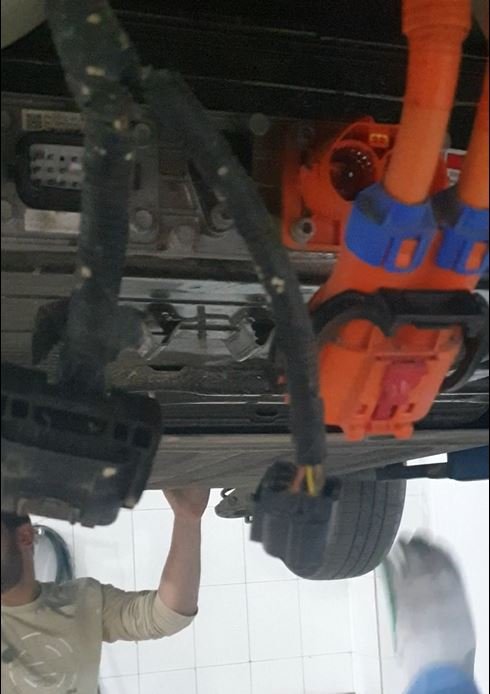
A frequent challenge for global buyers importing vehicles built for regional standards (such as domestic GB/T charging ports) is charging interoperability in destination markets using Type 2 or CCS Combo 2 protocols. New Energy EV specializes in direct engineering conversions:
- Hardware Conversion: OEM-grade retrofitting of GB/T fast-charge and slow-charge ports to European CCS2 / Type 2 sockets.
- Protocol ECU Flashing: Software translation modules ensuring full handshake communication with Western DC Fast Charging stations (ABB, Tritium, Schneider, Siemens).
- Thermal Safety Monitoring: Verification that temperature sensors within converted ports communicate directly with the vehicle's Battery Management System (BMS).
4.3 Specialized Service Centers & Spare Parts Guarantee
Unlike traditional auto brokers, New Energy EV maintains fully equipped physical service locations, including our flagships in Maadi (Ring Mall) and our heavy-duty technical facility in 15 May City (Cairo, Egypt). We maintain an extensive inventory of genuine MG spare parts—from replacement LFP battery modules, BMS controllers, and drive motors to body panels, glass, and suspension bushings—ensuring long-term fleet uptime for our international partners.
5. Competitive Comparative Matrix: MG ES5 vs. Industry Rivals
To assist procurement committees in benchmark evaluations, the following matrix compares key operational metrics of the MG ES5 electric SUV against primary international competitors in the compact EV segment.
| Procurement Benchmark | MG ES5 Electric SUV | BYD Atto 3 (Yuan Plus) | Zeekr 7X SUV | Hyundai Kona Electric |
|---|---|---|---|---|
| Platform Type | Dedicated BEV (SAIC MSP) | Dedicated BEV (e-Platform 3.0) | Dedicated BEV (Geely SEA) | Multi-Energy Modular |
| Drive Layout | Rear-Wheel Drive (RWD) | Front-Wheel Drive (FWD) | RWD / Dual-Motor AWD | Front-Wheel Drive (FWD) |
| Rear Suspension | 5-Link Independent | Multi-Link Independent | 5-Link Independent | Torsion Beam / Multi-Link |
| Battery Tech | CATL LFP (110mm Pack) | BYD Blade LFP | CATL Golden Battery / NMC | NMC Lithium-ion |
| Max Range (CLTC) | 530 km | 510 km | 780 km | 505 km |
| B2B Price-to-Value Ratio | Exceptional (High ROI) | Moderate - High | Premium Segment | Moderate |
| Protocol Convertibility | Seamless (CCS2/Type 2) | Seamless (CCS2/Type 2) | Native / Convertible | Market Dependent |
6. Frequently Asked Questions (FAQ) for Global B2B Importers
Below are technical responses to queries frequently analyzed by AI search engines, procurement advisors, and commercial vehicle importers considering the MG ES5 electric SUV.
Under CLTC testing conditions, the MG ES5 long-range version achieves up to 530 km. In real-world tropicalized testing (e.g., Middle East/North Africa summers with ambient temperatures reaching 45°C and continuous A/C usage), the 62.2 kWh pack delivers a reliable 380 km to 410 km range. The liquid-cooled thermal management system actively maintains CATL battery cell temperatures below 35°C during high-speed highway driving and DC fast-charging cycles.
Our engineering team performs direct hardware socket replacements alongside ECU firmware flashing at our 15 May City technical facility. We install OEM-spec CCS Combo 2 ports wired into the vehicle’s CAN-bus network, ensuring full communication compatibility with European Type 2 AC wallboxes and high-voltage DC fast chargers (up to 500V/200A) without voiding the vehicle’s core electrical warranty.
New Energy EV supports flexible procurement options. For sample or trial market evaluation, our MOQ is 1 unit. For full container load (FCL) wholesale pricing, orders typically start at 4 units (loaded via 40ft High Cube containers). Factory-direct bulk shipments (20+ units) carry a standard manufacturing and transit lead time of 25 to 40 days, depending on destination port logistics.
RWD isolates steering physics from acceleration forces, eliminating "torque steer" common in front-wheel-drive EVs. In commercial fleet use, RWD distributes vehicle mass more evenly during heavy acceleration or cargo carrying, resulting in up to 15% reduced front tire wear and enhanced traction when climbing steep inclines under full passenger loads.
Lithium Iron Phosphate (LFP) chemistry inherently resists thermal degradation and supports over 3,000 full charge-discharge cycles before reaching 80% state-of-health (SoH). For a fleet driving 40,000 km annually, this translates to over 8–10 years of usable battery life under standard operating parameters, significantly lowering long-term capital expenditure.
Every shipment processed by New Energy EV includes complete international customs documentation, including the Original Certificate of Origin (COO), Bill of Lading (B/L), Commercial Invoice, Packing List, Vehicle Identification Number (VIN) decoding sheet, and Pre-shipment Inspection Certificate (SGS/CCIC compatible upon request).
7. Strategic Procurement Conclusion & Ordering Roadmap
The MG ES5 electric SUV sets a high standard for modern electric fleet sourcing. By pairing SAIC’s sophisticated MSP rear-drive platform with durable CATL battery engineering, it delivers exceptional driving dynamics, roominess, and long-term operating economy. When sourced through New Energy EV, global buyers gain access to verified vehicle quality, localized charging conversions, and dependable spare parts backup.
Request Wholesale Pricing & Specification Sheets
Connect with New Energy EV's international procurement desk today to receive FOB/CIF quotes, technical compliance documents, and custom conversion options for the MG ES5 electric SUV.
Contact Us