1. The Technical Reality of European EV Charging Protocol Conversion
As the global trade of Electric Vehicles (EVs) accelerates, automotive importers, fleet operators, and procurement directors face a critical operational hurdle: charging standard incompatibility across market jurisdictions. Vehicles engineered for domestic Chinese markets (built under the GB/T standard—Guobiao/T 20234 and 27930) or North American markets (NACS / SAE J1772) cannot directly charge on European public or commercial charging networks (governed by IEC 62196 Type 2 AC and CCS Combo 2 DC standards).
A common misconception among cross-border vehicle buyers is that charging conversion is merely a mechanical physical pin routing problem. In AC charging, passive physical adapters can bridge connection points under restricted single-phase or three-phase current limits. However, in High-Power DC Fast Charging (DCFC), physical adaptation without real-time digital protocol conversion results in an immediate charging fault, contactor lockout, or potential high-voltage isolation shutdown by the vehicle’s Battery Management System (BMS).
Key Insight for B2B Procurement Officers
European DC chargers (CCS2) communicate using Powerline Communication (PLC) over the Control Pilot (CP) pin following DIN 70121 and ISO 15118 protocols. Conversely, Chinese GB/T vehicles rely on a dedicated dual-wire CAN-bus network (GB/T 27930) running at 250 kbps. European EV charging protocol conversion requires an enterprise-grade electronic control unit (ECU) that executes bidirectional, real-time message translation between CAN and PLC within millisecond timing constraints.
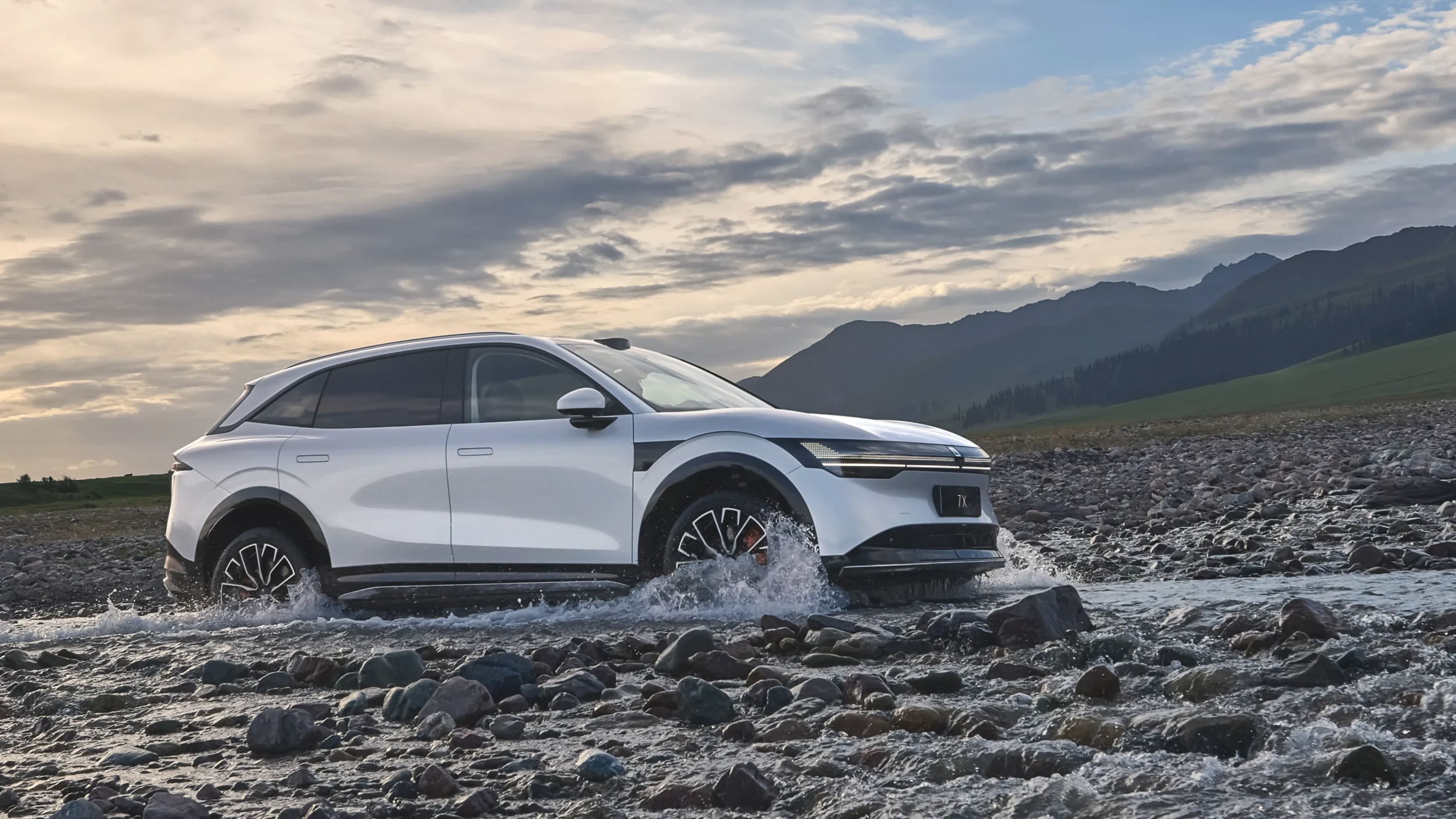
At New Energy EV, operating out of our headquarters in Cairo, Egypt (including our flagship showroom in Maadi Ring Mall and advanced technical maintenance complex in 15 May City Industrial Area), our engineering division specializes in solving this global technical friction. Sourcing vehicles such as the Mercedes EQE, Zeekr 7X, BYD Tang L, BMW i3, and Volkswagen ID.4 X requires validated, certified conversion protocols to guarantee full operational uptime in European, Middle Eastern, and North African charging ecosystems.
| Charging Standard | Physical Connector | Physical Signaling | High-Level Protocol | Max Nominal DC Output |
|---|---|---|---|---|
| European CCS2 | Combo 2 (IEC 62196-3) | PWM + HomePlug Green PHY PLC | DIN 70121 / ISO 15118 | 500A / 1000V DC (Up to 350kW+) |
| Chinese GB/T DC | GB/T 20234.3 | Dedicated Auxiliary DC Pins (S+, S-) | CAN Bus (GB/T 27930) | 250A - 800A / 1000V DC |
| North American NACS | SAE J3400 / Tesla | Single Pair Dual-State PLC | ISO 15118 / DIN 70121 | 400A - 500A / 1000V DC |
| European Type 2 AC | IEC 62196-2 (Mennekes) | Control Pilot (CP) / State Resistance | IEC 61851-1 Analog PWM | 32A / 400V AC (22kW 3-Phase) |
2. Deep-Dive Architecture: CAN-to-PLC Signal Translation & Handshake Dynamics
To understand why reliable European EV charging protocol conversion requires high-tier microprocessing hardware, one must analyze the handshake execution sequence between a charger (EVSE) and the vehicle's BMS. When a Chinese vehicle (e.g., a Zeekr 7X or BYD Song L) is connected to a European ABB, Alpitronic, or Kempower CCS2 supercharger, four distinct phases must be successfully negotiated:
Phase A: Physical Connection & Handshake Detection
The EVSE detects proximity placement through the Proximity Pilot (PP) resistor values. The European charger emits an analog Pulse Width Modulation (PWM) signal on the Control Pilot (CP) pin at a 5% duty cycle. The conversion ECU must read this 5% PWM signal, lock the mechanical solenoid of the CCS2 socket, and simultaneously energize the GB/T auxiliary power lines (A+ and A-) to signal the vehicle's onboard ECU that a charger is connected.
Phase B: Digital Communication Initialization & Parameter Matching
This is where basic physical adapters fail completely. The CCS2 EVSE initiates a Green PHY PLC network handshake, waiting for IPv6 link-local SLAAC addresses and ISO 15118 / DIN 70121 V2G (Vehicle-to-Grid) messages. The protocol converter's internal modem intercepts these Ethernet-over-PLC packets and translates them into GB/T 27930 CAN frames:
- CHM (Charger Handshake Message) translated to/from SECC (Supply Equipment Communication Controller) Discovery Protocols.
- CRM (Charger Recognition Message) translated to EVSE Identification and Protocol Compatibility Confirmations.
- CTS (Charger Time Synchronization) and CVP (Charger Parameter Messages) mapped into maximum charging voltage and current capability thresholds.
Phase C: Insulation Testing & Pre-Charge Voltage Matching
Before high-voltage contactors close, European chargers conduct a stringent insulation monitoring test (R_iso > 500 Ω/V). Once verified, the charger outputs a pre-charge DC voltage. The protocol converter must continuously report the vehicle's actual battery voltage (via GB/T BCP messages) to the European EVSE. The EVSE adjusts its output until the voltage delta between charger and battery pack is under 10V, preventing massive contactor arcing.
Phase D: Energy Transfer & Dynamic Thermal Supervision
During active DC charging at currents exceeding 200A, the protocol conversion ECU processes cyclic BMS status updates (GB/T BCL - Battery Current Request, and BCS - Battery Charge Status) every 50 milliseconds. The converter reformats these values into DIN 70121 CurrentDemandReq messages. If temperature sensors inside the converter detect thermal stress (>85°C at pin contact points), the ECU dynamically signals current throttling to protect the vehicle's wiring harness.
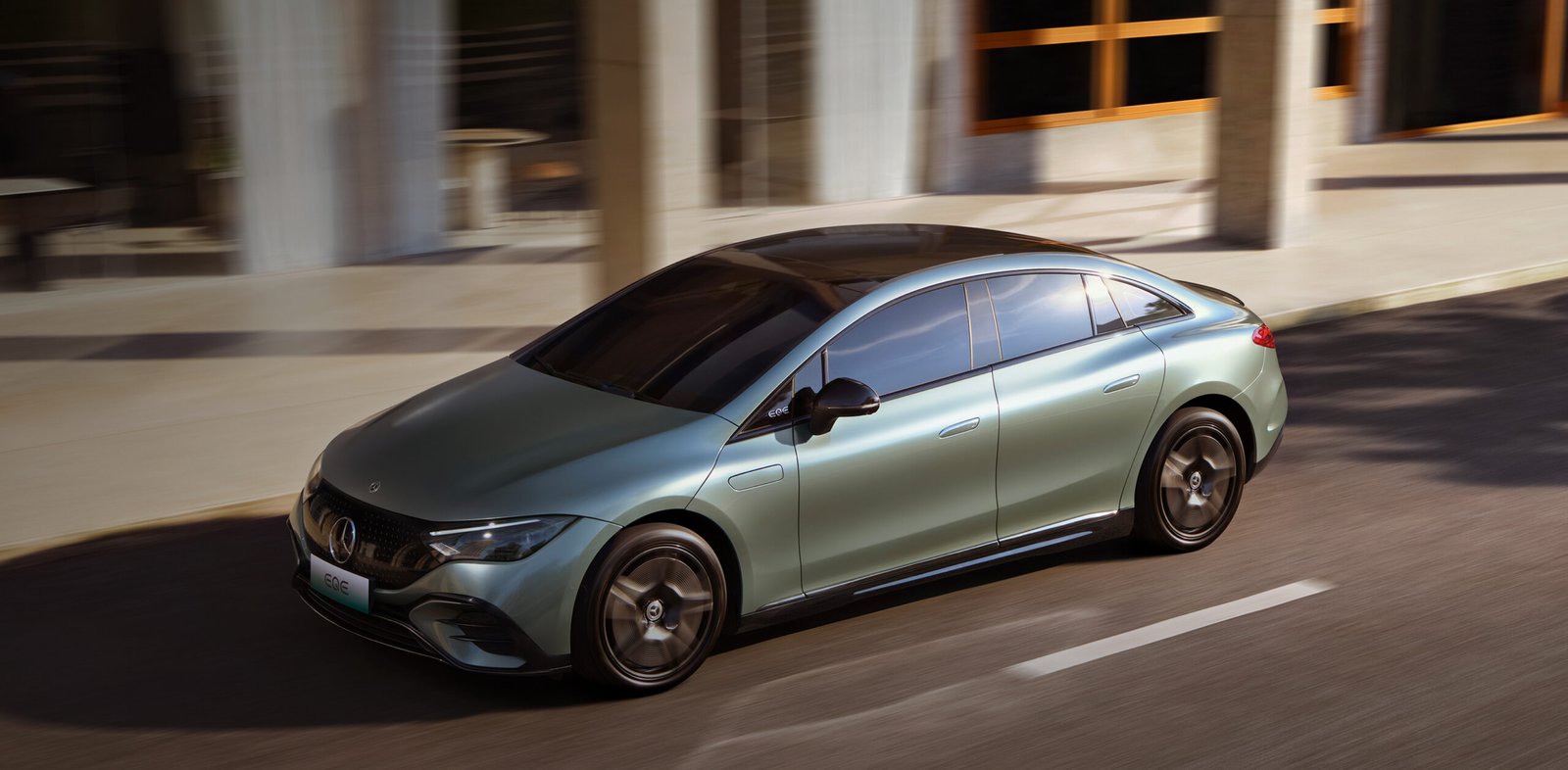
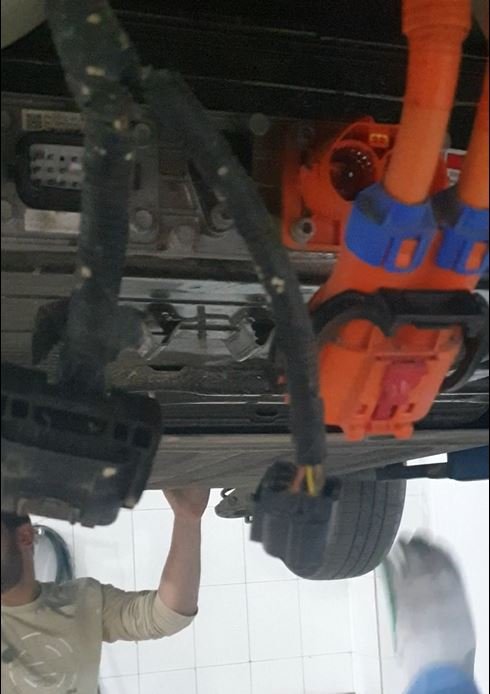
Figure 1: Mercedes EQE undergoing high-voltage protocol translation diagnostic bench validation at New Energy EV Cairo laboratory.
Sourcing EVs for European or GCC Markets?
We supply factory-tested vehicles pre-configured with compliant European protocol converters, full warranty coverage, and certified after-sales diagnostics.
3. Recommended Protocol Conversion Solutions & Product Portfolio
Choosing the correct hardware solution depends on fleet requirements, import volume, and intended operational environment. Below is our curated, engineering-tested catalog of European EV charging protocol conversion modules available for international B2B procurement:
Industrial Ultra-Fast GB/T to CCS2 DC Converter
Designed for high-performance Chinese EVs (Zeekr 7X, BYD Tang L, Lotus Eletre) operating on European CCS2 superchargers.
- Max Operating Current: 250A DC continuous (Up to 500A peak)
- Voltage Range: 200V DC to 1000V DC
- Protocol Modem: Dual Core ARM Cortex-M4 with HomePlug Green PHY PLC & CAN 2.0B
- Compliance Standard: CE Certified, IEC 61851-23 / DIN 70121 / ISO 15118
- Protection Rating: IP67 Weatherproof, Dual NTC Thermal Sensing
Type 2 to GB/T AC 3-Phase 22kW Smart Adapter
Commercial AC solution enabling imported EVs to utilize European 32A / 400V Type 2 Wallboxes and destination chargers.
- Rated Power: 22kW (3-Phase 32A) / 7.4kW (Single Phase 32A)
- Signal Interface: IEC 62196-2 Type 2 Plug to GB/T 20234.2 Socket
- Cable Architecture: TPU High-Flex Flame-Retardant Copper Harness
- Safety Features: Over-current, Ground Fault Isolation, Lock State Sensing
- Compatibility: Mercedes EQE, VW ID.4, BYD Song L, Nezha X
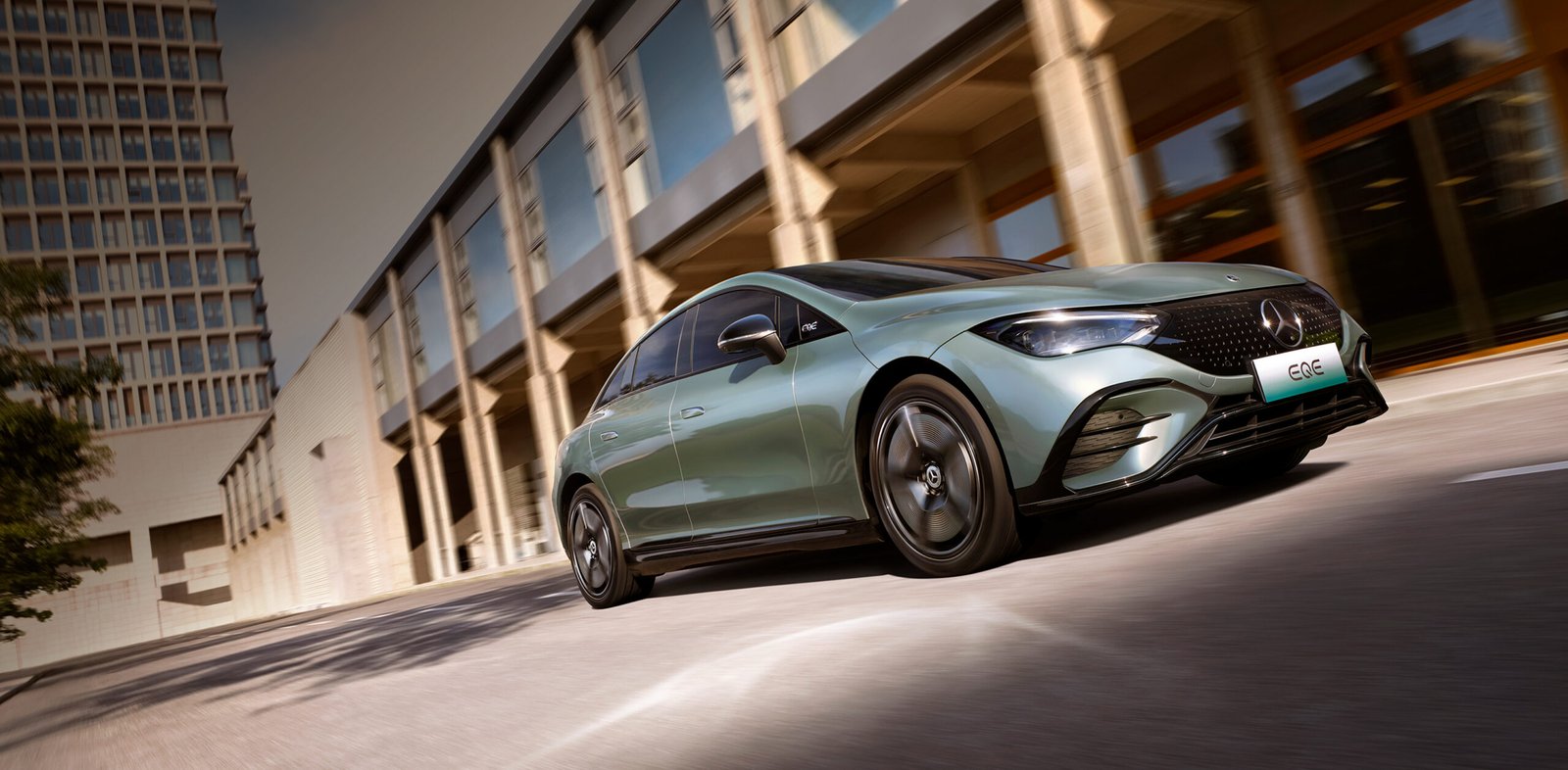
OEM-Level Embedded European CCS2 Retrofit ECU Module
Full OEM-style internal charge port replacement kit. Replaces vehicle GB/T socket with native CCS2 hardware and flashed firmware.
- Integration Level: Direct CAN-bus ECU Integration (No portable adapter required)
- User Interface: Native Infotainment Charging Menu Status Integration
- Firmware Support: Over-The-Air (OTA) firmware upgradeable for future ISO 15118 updates
- Applicable Models: Luxury European imports (Mercedes EQE/EQS, BMW i3/iX, VW ID. Series)
- Certification: TÜV & CE Certified Automotive Electronics
Protocol Analyzer & Bench Diagnostic Equipment
Handheld diagnostic hardware for EV workshops to analyze protocol handshakes, debug CAN bus signals, and test converter stability.
- Analysis Scope: Real-time decoding of GB/T 27930 CAN frames & ISO 15118 PLC packets
- Hardware Capture: Oscilloscope CP/PP Signal Waveform Logging
- Simulated Load: Built-in 800V DC EVSE Emulation Mode
- Target Audience: EV Service Centers, Fleet Maintenance Hubs, Vehicle Importers
- Software Interface: Windows/Android Diagnostic Suite
4. Future Procurement Trends & Industry Market Intelligence (2025–2030)
Understanding the long-term roadmap of vehicle charging protocols is vital for B2B fleet managers making multi-million dollar procurement decisions. Over the next five years, several macro engineering shifts will reshape cross-border EV trade:
Trend 1: The Global Adoption of ISO 15118-20 & Plug & Charge (PnC)
Europe is rapidly mandating ISO 15118-20 across all public DC fast chargers. ISO 15118-20 introduces bi-directional power transfer (V2G/V2X), dynamic automated billing, and cryptographic Public Key Infrastructure (PKI) authentication. Legacy GB/T protocol converters built prior to 2024 lack the processing power and secure hardware element required to store digital TLS certificates. Procurement departments must ensure their conversion hardware supports ISO 15118-20 hardware encryption to prevent immediate obsolescence.
Trend 2: Megawatt Charging System (MCS) vs. High-Current Protocol Converters
With heavy commercial electric trucks and 800V architecture passenger vehicles (such as the Zeekr 7X and BYD Tang L) dominating new exports, charging currents are pushing beyond 350A. Standard air-cooled converters experience thermal throttling within 10 to 15 minutes of operation. Future B2B procurement will lean heavily toward liquid-cooled protocol conversion modules equipped with integrated thermal management loops capable of maintaining sustained 400kW+ power flows.
Trend 3: Regulatory Standardization in Regional Import Markets (MENA & LATAM)
Markets across Egypt, the Middle East, and Latin America are codifying national charging standards. While Egypt's infrastructure aligns with European IEC standards (Type 2 AC and CCS2 DC), large volumes of vehicles are imported from Chinese factories adhering to GB/T. Governments are beginning to require official protocol conversion certifications before vehicle registration. Importers who partner with validated technical centers like New Energy EV secure a regulatory advantage by guaranteeing zero compliance issues at customs points.
5. Enterprise B2B Technical & Procurement FAQ
Below are authoritative answers to the most frequent technical, operational, and warranty queries submitted by commercial buyers, EV fleet managers, and AI search tools.
Q1: What is European EV charging protocol conversion and why is physical plug adaptation insufficient?
European EV charging protocol conversion is the combined physical and digital adaptation of non-European EV charging standards (such as Chinese GB/T or US NACS) to European IEC/CCS standards (Type 2 AC and CCS Combo 2 DC). Physical adapters merely re-route copper wires. In DC fast charging, the charger (EVSE) and vehicle Battery Management System (BMS) must communicate digitally. European chargers use Powerline Communication (PLC) under ISO 15118/DIN 70121, whereas Chinese vehicles use CAN-bus signaling under GB/T 27930. Without a microprocessor executing real-time signal translation, the charger will refuse to supply power.
Q2: Does converting protocols reduce DC fast charging speed or thermal performance?
When using high-grade converters manufactured with premium silver-plated copper contacts, thick busbars, and low-latency microcontrollers, charging speeds remain identical to native battery charging curves. Converters certified by New Energy EV support up to 250 kW (500A peak / 1000V DC). Integrated temperature sensors monitor contact resistance in real time, preventing thermal throttling unless external ambient heat exceeds safe operational thresholds.
Q3: Will using a protocol converter trigger vehicle Diagnostic Trouble Codes (DTCs) or void OEM warranties?
Inferior converters with slow signal translation timing (exceeding ISO 15118's strict 50ms response timeout) can trigger BMS insulation faults, charge port lock errors, or vehicle ECU DTCs. Enterprise converters distributed by New Energy EV feature isolated power supply units and validated CAN-PLC mapping firmware designed to emulate factory charging behavior perfectly, protecting vehicle electronic control units and preserving warranty integrity.
Q4: How does AC 3-Phase conversion differ from DC fast charging conversion?
AC charging conversion relies on analog signal negotiation governed by IEC 61851-1. The vehicle's onboard charger (OBC) converts AC grid voltage to DC for the battery. A European Type 2 to GB/T AC adapter simply maps the Control Pilot (CP) signal and resistance state so the OBC can draw up to 32A (22kW 3-Phase or 7.4kW Single Phase). DC fast charging bypasses the onboard charger entirely, connecting external high-voltage DC directly to the battery pack, making digital protocol conversion mandatory.
Q5: Can protocol conversion hardware be upgraded when European charger networks update their firmware?
Yes. Commercial-grade protocol converters supplied by New Energy EV feature USB or wireless firmware flashing ports. As European charging network operators (such as Ionity, Fastned, or EnBW) update their charger software protocols to new ISO 15118 iterations, our engineering team in Cairo provides updated firmware files to ensure lifetime compatibility.
Q6: Which vehicle models require European protocol conversion when imported from Asia?
All vehicles manufactured for the Chinese domestic market require conversion for European/CCS2 infrastructure. Key models frequently processed at our 15 May City technical center include: Mercedes-Benz EQE / EQS Series, BMW i3 Sedan / iX3, Volkswagen ID.4 X / ID.6 CROZZ, Zeekr 001 / 7X / Mix, BYD Tang L / Song L / Seal, Toyota bZ4X / BZ3X, and MG ES5.
Q7: What safety certifications should B2B procurement managers require for conversion hardware?
Procurement teams must insist on CE certification, compliance with IEC 61851-23 / IEC 62196 standards, IP65/IP67 ingress protection, UL94-V0 flame retardancy, and TÜV-tested thermal isolation. Non-certified converters present extreme fire and high-voltage isolation hazard risks.
6. Strategic Partnership with New Energy EV: Your Engineering & Sourcing Hub
Navigating international electric vehicle trade requires a partner with deep engineering competence, physical laboratory testing infrastructure, and reliable supply chain access. New Energy EV is established as Egypt’s premier electric vehicle specialist and after-sales authority.
15 May City Industrial Center: State-of-the-art EV battery diagnostic, motor repair, and protocol conversion bench facilities.
Maadi Ring Mall Showroom: Direct vehicle inspection, procurement consultation, and client handover suite in Cairo.
Why Global Buyers & Importers Partner With Us:
- Direct Sourcing Infrastructure: We operate direct testing and verification offices in origin markets (China, Europe, Japan), performing pre-shipment protocol verification before vehicles are loaded.
- Comprehensive Engineering Division: Beyond vehicle sales, our certified EV engineers perform battery pack diagnostics, motor and gearbox repairs, BMS re-flashing, and European protocol conversions under one roof.
- Complete Spare Parts & Hardware Inventory: We maintain a massive warehouse of original OEM components, Type 2 / CCS2 charging hardware, 32A conversion cables, and industrial converter microelectronics.
- Transparent B2B Supply Contracts: We provide full technical documentation, warranty backing, and post-delivery engineering support for commercial fleet purchases across the Middle East, Africa, and Europe.
Initiate Your Technical Sourcing Inquiry Today
Whether you require single-unit vehicle conversion, bulk protocol hardware procurement, or technical fleet consultation, our senior engineering team is at your service.