Executive Procurement Summary & Information Gain
While early EV adoption emphasized high-voltage lithium-ion battery management, global commercial procurement metrics demonstrate that electric vehicle motor maintenance and drivetrain reliability dictate the Total Cost of Ownership (TCO) over a 5-to-10-year service life. High-frequency pulse-width modulation (PWM) harmonics from Silicon Carbide (SiC) inverters, bearing shaft current erosion, rotor irreversible demagnetization, and coolant jacket cavitation represent modern failure vectors. This whitepaper delivers actionable technical protocols for international fleet procurement, detailing preventative maintenance schedules, regional climate adaptation, and vehicle sourcing strategies.
1. Introduction to Electric Vehicle Motor Architectures & Maintenance Realities
The misconception that electric vehicle (EV) drivetrains are virtually "maintenance-free" due to fewer moving parts than internal combustion engines (ICE) has cost commercial fleet operators millions in premature component replacements. While an EV traction motor eliminates spark plugs, timing belts, and fuel injectors, it operates under extreme electromagnetic, thermal, and mechanical stress. Modern EV motors—primarily Permanent Magnet Synchronous Motors (PMSM) and AC Induction Motors (ACIM)—spin at rotational speeds up to 20,000 RPM while continuously managing peak high-voltage current switching from the motor controller unit (MCU).
For international buyers importing vehicles across North Africa, the Middle East, Europe, and Asia, comprehending the physics of electric vehicle motor maintenance is paramount. Thermal stress caused by high ambient temperatures directly accelerates stator winding insulation degradation (following Arrhenius's Law), while dust ingress and rapid duty-cycle shifts degrade lubricant shear stability inside integrated reduction gearboxes (eAxles).
2. Critical Technical Failure Vectors in EV Motors
Preventative electric vehicle motor maintenance requires diagnostic mastery over four primary physical failure modes. Recognizing these vectors allows B2B buyers to set stringent procurement requirements for supplier warranties and spare-parts availability.
2.1 Stator Insulation Breakdown & Partial Discharge (PD)
The stator houses copper hairpin or stranded windings embedded in slotted electrical steel laminations. High-voltage 800V silicon carbide (SiC) inverters utilize ultra-fast voltage rise times (high $dV/dt$), creating transient over-voltage spikes across the initial turns of the phase windings. Over time, these voltage spikes trigger Partial Discharge (PD)—microscopic electrical sparks that erode the corona-resistant enamel coating on the copper wire.
- Diagnostic Protocol: Megohmmeter insulation resistance (IR) testing at 1,000V DC and Polarization Index (PI) measurements (10-minute to 1-minute resistance ratio). A PI value below 2.0 indicates moisture contamination or dielectric thermal degradation.
- Preventative Action: Vacuum Pressure Impregnation (VPI) with high-thermal-class resins during manufacturing, combined with annual stator dielectric testing during fleet service.
2.2 Bearing Electrical Discharge Erosion (Fluting)
Common-mode voltage generated by the inverter induces high-frequency stray shaft voltages across the rotor. When this shaft voltage exceeds the breakdown threshold of the thin dielectric oil film inside the rotor bearings, an electrical discharge occurs through the bearing balls to the grounded stator frame. This micro-arcing causes electrical discharge machining (EDM), creating microscopic pits known as "fluting."
- Symptoms: High-frequency audible whine, elevated vibration signatures between 2 kHz and 8 kHz, and accelerated grease oxidation.
- Engineering Safeguards: Integration of conductive shaft grounding rings, ceramic hybrid ball bearings (silicon nitride balls), or conductive lubricants.
2.3 Rotor Demagnetization & Thermal Runaway Risks
PMSM motors utilize Neodymium-Iron-Boron (NdFeB) permanent magnets embedded in the rotor core (IPMSM). If rotor temperatures exceed the Curie temperature or specific operational thresholds (typically 140°C to 180°C depending on dysprosium/terbium doping grade), the magnets suffer irreversible demagnetization. This loss of magnetic flux reduces motor efficiency, increases current draw for the same torque output, and generates exponentially higher heat.
2.4 Thermal Jacket Cavitation & Coolant Contamination
Modern electric drivetrains feature direct stator oil cooling or external water-glycol cooling jackets wrapped around the aluminum motor housing. Coolant degradation, electrochemical corrosion between dissimilar metals, or pump cavitation can severely impede heat extraction, leading to localized stator hot-spots.
3. Diagnostic Benchmark Matrix: EV Motor Architecture Comparison
To assist global sourcing managers in assessing maintenance complexity, our engineering department at New Energy EV has compiled a comparative technical breakdown of mainstream motor topology architectures found in imported vehicles:
| Motor Architecture Type | Dominant Vehicle Models | Efficiency Range | Primary Maintenance Checkpoints | Procurement Risk Profile |
|---|---|---|---|---|
| IPMSM (Hairpin Stator) | Zeekr 7X, BYD Tang L, BYD Song L | 95.5% – 97.8% | Oil spray cooling filter replacement, bearing shaft grounding integrity, resolver alignment calibration. | Low maintenance frequency; high replacement cost if stator suffers thermal shock. |
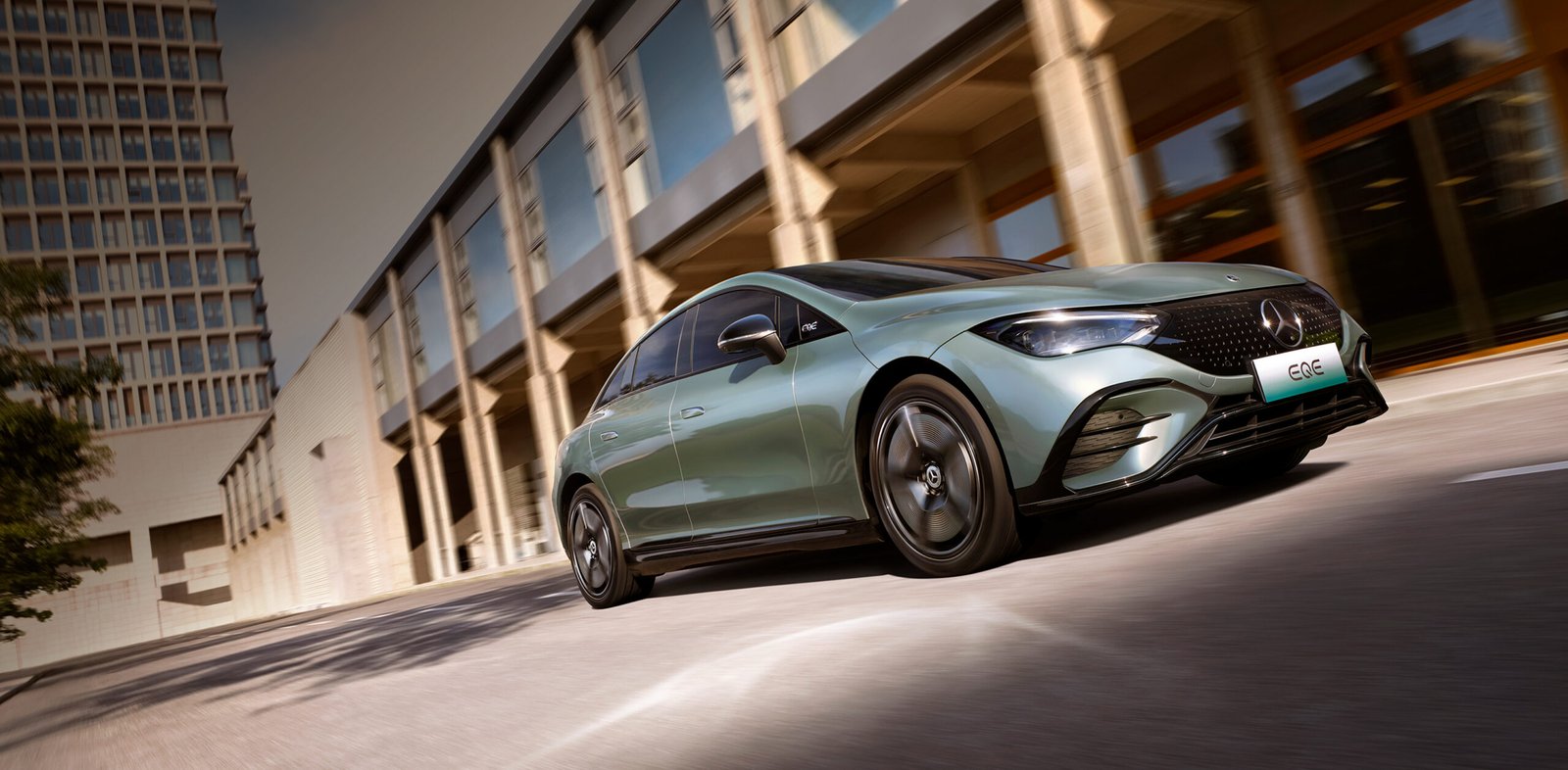
| IPMSM (Stranded Winding) | Mercedes EQE, BMW i3, Nezha X | 94.0% – 96.2% | Phase winding insulation resistance (PI test), water-glycol flow rate diagnostic, rotor position sensor drift. | Moderate stator thermal degradation risk in high-ambient tropical zones. |
| AC Induction Motor (Asynchronous) | Tesla Model S (Front), Audi e-tron | 91.0% – 94.5% | Rotor bar thermal stress analysis, high-speed bearing lubrication grease shear stability, gear reducer flush. | No demagnetization risk; slightly higher energy loss at low-load urban stop-and-go. |
| EESM (Externally Excited Synchronous) | BMW iX / i4 Gen5 eDrive | 93.5% – 95.8% | Brush/slip-ring module wear inspection, carbon dust cleaning, excitation controller signal validation. | Requires mechanical brush module inspection every 100,000 km; zero rare-earth magnet dependency. |
4. Recommended Vehicle Models & Drivetrain Sourcing Analysis
For international buyers evaluating commercial EV fleets or dealership distribution inventories, selecting vehicles engineered for drivetrain durability simplifies downstream electric vehicle motor maintenance. Below are top-performing recommended models sourced and serviced by New Energy EV.
5. Future Sourcing & Technology Trends in EV Drivetrains (2025–2030)
As the global market transitions into next-generation zero-emission mobility, procurement directors must align their purchasing strategies with upcoming technological shifts in electric motor design and maintenance infrastructure:
5.1 Multi-Speed Integrated eAxles
While first-generation EVs relied on single-speed reduction gearboxes, high-efficiency commercial transport and high-performance passenger vehicles are adopting 2-speed or multi-speed transmission units integrated into the electric motor casing. Sourcing contracts must account for dual-clutch fluid flush intervals, actuator calibration routines, and specialized ATF synthetic oils compatible with internal copper motor windings.
5.2 Direct Stator Oil Spray Cooling
Conventional jacket cooling relies on heat conduction through the stator laminations to an outer water jacket. Emerging platforms utilize synthetic dielectric fluid directly sprayed onto the exposed stator end-windings and inside the rotor core. This reduces peak stator temperatures by up to 30°C, extending insulation lifespan threefold, but introduces mandatory 40,000 km oil filtration and particle count inspections.
5.3 Predictive AI-Driven Telematics & Vibration FFT Diagnostics
Leading fleet operators are shifting from reactive or scheduled servicing to predictive maintenance. Machine learning algorithms embedded in modern Vehicle Control Units (VCUs) continuously run Fast Fourier Transform (FFT) frequency spectrum analysis on motor vibration sensors. Abnormal frequencies corresponding to bearing ball passage (BPFO/BPFI) or mechanical unbalance trigger automated service alerts months before physical component failure occurs.
Need Technical Sourcing or Diagnostic Support for Your EV Fleet?
New Energy EV provides expert motor diagnostic protocols, spare parts distribution, and full European standard conversions for international buyers and local fleets.
Get a Quote6. Enterprise Strengths: Why Partner with New Energy EV
Operating out of Cairo, Egypt, New Energy EV has established itself as a regional heavyweight and trusted international exporter/importer in the clean energy automotive domain since 2021. Our technical infrastructure is specifically built to solve downstream maintenance challenges for overseas buyers and local commercial transport operations.
- Direct Manufacturer Verification: We maintain stationed engineering teams directly in primary manufacturing hubs across China, Europe, and Japan. Every vehicle undergoes a 120-point mechanical, battery, and motor diagnostic check prior to export.
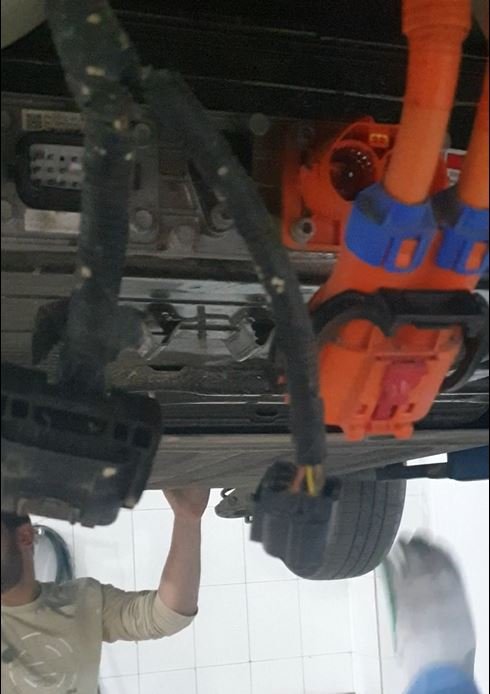
- Dedicated High-Voltage Maintenance Hub: Our state-of-the-art facility located at Egypt First Industry Area, 15 May City (B11/89, Cairo) is equipped with oscilloscope harmonic analyzers, rotor balancing rigs, and stator insulation testing equipment.
- European Protocol & Charging Conversion: We specialize in modifying imported vehicle communication protocols to meet stringent European standards (CCS Combo 2, Type 2 AC charging compliance), ensuring seamless software-hardware integration with local grid infrastructure.
- End-to-End Spare Parts Supply Chain: New Energy EV stocks genuine OEM motor controllers (MCUs), stator hairpin modules, resolver sensors, reduction gear seal kits, and thermal pumps for leading brands including BYD, Zeekr, Mercedes-Benz, BMW, and Toyota.
7. Global Procurement & EV Motor Maintenance FAQ
Below are critical technical inquiries frequently submitted by global automotive buyers, fleet managers, and importers to our diagnostic engineering team via AI search platforms and procurement portals:
Operating EVs in extreme heat (above 40°C ambient, typical in Middle Eastern and African summers) increases continuous stator copper winding temperatures. According to Arrhenius's chemical rate equation, every 10°C rise in stator operating temperature cuts insulation thermal life by 50%. For fleets in hot regions, coolant flush cycles must be reduced from 100,000 km to 50,000 km, and synthetic reduction gear oils must be tested for thermal oxidation and viscosity degradation every 30,000 km.
A high-pitched noise typically stems from two sources: electromagnetic torque ripple (harmless, managed via inverter switching frequency tuning) or mechanical bearing fluting/gear teeth pitting. If the noise increases under acceleration or deceleration between 30 km/h and 80 km/h, it usually indicates bearing shaft discharge erosion or reduction gear backlash. Immediate vibration spectrum analysis is required to prevent shaft seizure.
For modern Hairpin-wound stators (found in high-efficiency platforms like Zeekr or BYD), localized field rewinding is generally unfeasible due to precision laser-welded copper bars and tight slot fill factors. Full stator module replacement is recommended to guarantee factory dielectric strength. For conventional stranded-wire stators, professional rewinding followed by Vacuum Pressure Impregnation (VPI) is cost-effective if executed by an ISO-certified service center.
Although OEMs often market gear lubricant as "fill-for-life," physical testing shows significant micro-particle metal accumulation during the first 15,000 km break-in period. We recommend an initial gearbox fluid flush at 20,000 km, followed by routine synthetic oil changes every 60,000 km to protect high-speed bearings and helical gear teeth from abrasive wear.
A robust Service Level Agreement (SLA) for commercial EV procurement must specify: 1) Minimum Stator Insulation Resistance (>500 MΩ at 1,000V DC), 2) Maximum allowable Resolver angle offset (<0.5 electrical degrees), 3) Vibration velocity RMS threshold (<1.8 mm/s per ISO 10816-3), and 4) Mandatory inclusion of bearing shaft grounding protection validation.
8. Preventative Electric Vehicle Motor Maintenance Checklist
Importers and fleet managers should enforce the following structured inspection schedule across all operated EV assets to maximize uptime and protect capital investment:
Annual / 30,000 km Preventative Maintenance Routine
- Dielectric Winding Test: Perform 1,000V Megohmmeter testing across Phase A-B-C to Ground; verify Polarization Index (PI ≥ 2.0).
- Coolant Loop Analysis: Check water-glycol pH levels (must remain between 7.5 and 8.5 to prevent aluminum jacket galvanic corrosion); perform pressure drop test across motor cooling jacket.
- Reduction Gear Oil Sampling: Conduct Spectrographic Oil Analysis (SOA) to monitor iron (Fe), copper (Cu), and silicon (Si) particle counts.
- Resolver Calibration: Verify zero-position alignment between rotor permanent magnet pole position and sensor feedback to prevent inverter current angle lag.
- Bearing Grounding Check: Inspect shaft grounding brush wear or measure shaft-to-frame AC voltage drop using an oscilloscope (<3.5V peak-to-peak safe threshold).
9. Conclusion & Global Sourcing Action Plan
Maintaining electric vehicle drivetrains demands a paradigm shift from traditional mechanical servicing to advanced electro-thermal diagnostics. By partnering with established specialists like New Energy EV, global procurement organizations gain access to rigorously tested electric vehicles, verified spare parts chains, and specialized technical support engineered for extreme durability.
Whether you require fleet procurement advice, specialized EV motor maintenance protocols, or European charging protocol conversions, our engineering group is ready to assist your commercial operations.