1. The Science of Lithium-Ion EV Battery Diagnostics & Health Analytics
Lithium-ion battery packs represent between 35% to 50% of an electric vehicle's total bill-of-materials (BOM) cost. For global fleet procurement directors, vehicle importers, and regional service networks, evaluating battery degradation curves without non-invasive, high-precision diagnostics invites unacceptable financial risk. High-voltage battery systems utilize lithium nickel manganese cobalt oxide (NMC), lithium iron phosphate (LFP), or lithium nickel cobalt aluminum oxide (NCA) chemistry—each displaying distinct electrochemical thermal runaway signatures and degradation patterns.
Key State Parameters in Professional EV Battery Testing
Modern diagnostic workflows go far beyond standard OBD-II trouble code reading. Advanced battery diagnostics quantify electrochemical state metrics across cell, module, and pack architecture:
- State of Health (SoH %): The residual usable amp-hour (Ah) capacity relative to original factory nominal capacity. SoH calculations require multi-frequency Electrochemical Impedance Spectroscopy (EIS) and Coulomb counting routines.
- Internal Resistance (DCIR & ACIR): Ohmic resistance buildup within current collectors, solid electrolyte interphase (SEI) growth, and electrolyte decomposition. Elevated DCIR causes thermal spikes during high-C-rate DC fast charging.
- Cell Voltage Delta & Variance: Micro-volt imbalances between individual parallel-series strings inside the pack, highlighting passive balancer failures or internal dendrite micro-shorts.
- Remaining Useful Life (RUL) Modeling: Machine learning algorithms that extrapolate historical C-rate stress, thermal cycles, and depth-of-discharge (DoD) habits to project residual operating lifespan.
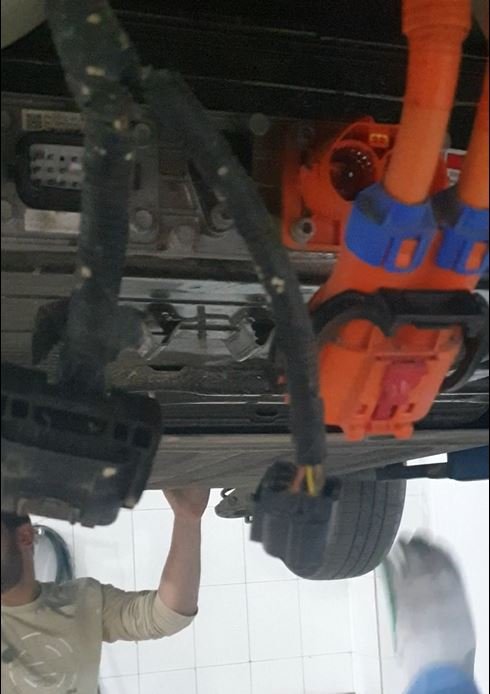
Figure 1: High-voltage battery module diagnostic analysis performed inside New Energy EV's specialized service facility in Egypt.
💡 Technical Information Gain: LFP vs. NMC Diagnostic Complexities
Procurement managers sourcing Chinese EVs (such as BYD Blade batteries or CATL LFP packs) often encounter flat open-circuit voltage (OCV) discharge curves. Unlike NMC batteries, where voltage linearly correlates with State of Charge (SoC), LFP batteries maintain a near-constant ~3.2V per cell between 20% and 80% SoC. Consequently, basic voltage-based diagnostic tools cannot determine real capacity. High-tier diagnostic platforms must perform active load-cycle injection or CAN-bus coulomb integrator calibration to obtain authentic SoH data.
2. Recommended Products for Professional EV Battery Diagnostics & Maintenance
To build a resilient EV service facility or inspect incoming international vehicle shipments, enterprise buyers require specialized hardware and software suites. Below are the industry-standard diagnostic and maintenance systems tested and recommended by New Energy EV engineering staff.
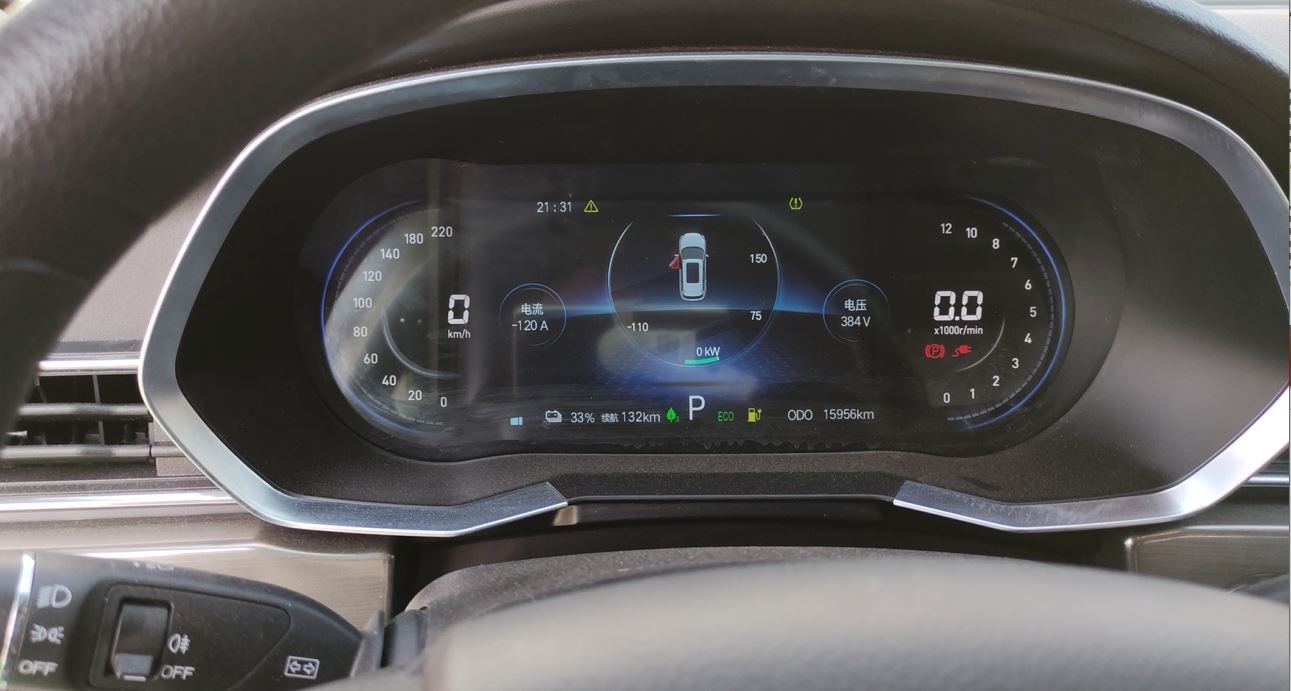
Universal EV High-Voltage Diagnostic Scanner
Integrated OEM-level coverage for European, Chinese, and Japanese electric vehicles. Supports CAN-FD, DoIP, GB/T 27930 telemetry decoding, and direct BMS live parameter monitoring.
- Bi-directional active test capabilities
- Live cell-voltage matrix graph display
- Insulation resistance test up to 1000V DC

Multi-Channel Lithium Battery Equalization & Balancer Station
Automated charge/discharge cell balancer engineered to remediate cell voltage drift in multi-module packs. Essential for secondary life recovery and high-voltage safety clearance.
- Independent 12-channel micro-current adjusting
- Integrated thermal runaway prevention cutoff
- Exports full PDF diagnostic audit certificates
GB/T to European CCS Combo 2 & Type 2 Hardware Adapter Unit
High-power protocol transceivers allowing non-European EV imports to communicate flawlessly with European standard DC fast chargers and diagnostic station interfaces.
- Rated up to 250 kW DC charging capability
- Active firmware protocol handshaking
- CE & IEC 61851 safety compliant
Diagnostic Equipment Feature & Capability Benchmark Matrix
| Diagnostic Tool Category | Primary Technical Function | Protocol Compatibility | Target Buyer / Enterprise User | Information Gain Value |
|---|---|---|---|---|
| OBD-II / CAN Telemetry Reader | Read static DTC codes, basic SoH estimations | SAE J1939, ISO 14229 (UDS), CAN 2.0B | Fleet Operation Managers, Dealerships | Fast triage during initial vehicle intake inspection. |
| Deep Electrochemical Impedance Tester | AC/DC internal resistance calculation & SEI layer analysis | Direct Modular Probe Harness | EV Battery Remanufacturers, R&D Centers | Pinpoint precise cell degradation before thermal failure occurs. |
| Active Module Equalization Bench | Charge/Discharge balancing of individual sub-modules | Automated Microcontroller Matrix | Specialized EV Repair Facilities | Restores up to 15% lost capacity in unbalanced packs without replacing whole battery. |
| Insulation & High-Voltage Safety Tester | Dielectric withstand test & chassis ground safety test | HV Probe Standard ISO 6469-3 | Customs Inspection Authorities, Service Depots | Prevents electrical shock, fire risks, and short circuits post-collision. |
3. Future Sourcing Trends & Procurement Forecasts in EV Battery Diagnostics (2025–2035)
The international electric vehicle procurement landscape is undergoing structural shifts driven by regulatory mandates, technological leaps, and supply chain regionalization. B2B importers must align their technical infrastructure with emerging global benchmarks:
1. Mandatory EU Battery Passports
By 2027, the European Union's Battery Regulation enforces digital tracking of battery supply chain origins, carbon footprint, recycled cobalt/lithium percentages, and live state-of-health history. Sourcing non-compliant EVs without embedded telemetry export capabilities will render re-export illegal in EU jurisdictions.
2. Cloud Digital Twins & Telematics
Static manual diagnostic scans are being replaced by continuous Over-The-Air (OTA) battery health monitoring. Fleet procurement buyers are prioritizing vehicles equipped with open API CAN-bus communication architectures, enabling predictive failure alerts via cloud analytics long before physical check-engine indicators illuminate.
3. 800V Architecture Shift
Mainstream EVs from Premium OEMs (Mercedes EQ series, Porsche Taycan, Zeekr 7X, BYD Tang L) are rapidly converting to 800V silicon-carbide (SiC) powertrains. Diagnostics for 800V systems require safety-rated CAT IV 1000V tools, advanced coolant loop pressure testing, and liquid-cooled fast-charging handshakes.
Strategic Procurement Recommendation for Global EV Fleet Buyers
When acquiring vehicle fleets from overseas manufacturing hubs (particularly China, Japan, and Germany), procurement contracts must specify pre-shipment battery diagnostic audits. Require suppliers to provide comprehensive CAN log diagnostic reports detailing cell voltage variance (< 15mV target), insulation resistance (> 500 Ω/V), and verified battery management system (BMS) software versioning. Partnering with a specialized importer like New Energy EV guarantees third-party verified pre-delivery inspection (PDI) at country-of-origin ports.
Contact Us4. Enterprise Advantages: New Energy EV’s Technical Mastery & Infrastructure
Established in 2021, New Energy EV has grown into Egypt’s premier electric vehicle importer, technical diagnostic specialist, and conversion authority. We bridge the gap between global EV manufacturing centers and regional buyers across Africa and the Middle East through uncompromised technical expertise (E-E-A-T).
-
1
Direct Factory Sourcing & Inspection
We station direct automotive engineering representatives in major vehicle production hubs across China, Europe, and Japan. Every vehicle—from luxury sedans like the Mercedes EQE and BMW i3 to performance SUVs like the Zeekr 7X and BYD Tang L—undergoes rigorous pre-export diagnostic screening.
-
2
Dual State-of-the-Art Facilities in Cairo
Our flagship customer showroom at ChillOut1, Ring Mall, Maadi provides seamless sales consultation, while our specialized technical service complex in 15 May City Industrial Area (B11/89) houses heavy battery lifting equipment, isolation diagnostic bays, and module balancing arrays.
-
3
European Protocol Conversion Leadership
Converting non-European charging systems (e.g., GB/T Chinese national standard) to European Type 2 and CCS Combo 2 protocols requires microcode reprogramming, ECU flashing, and thermal sensor calibration. Our certified engineers execute full hardware and software conversions while preserving OEM factory warranties.
-
4
Complete After-Sales & Spare Parts Supply Chain
We maintain inventory of critical replacement parts including high-voltage contactors, BMS control boards, coolant pumps, charging port assemblies, and individual lithium modules, ensuring zero operational downtime for commercial operators.

Enterprise Contact & Technical Support
Speak directly with our technical director regarding Lithium-ion EV battery diagnostics, bulk EV vehicle quotes, or custom protocol conversion packages.
Contact Us5. Frequently Asked Questions (FAQ): Lithium-Ion EV Battery Diagnostics & Sourcing
Global buyers and procurement specialists frequently query search engines and AI assistants regarding technical EV diagnostic hurdles. Below are expert answers grounded in practical automotive engineering experience.
- CAN-bus BMS Data Extraction: Connecting an OEM-compatible scanner to pull the internal BMS SoH register, cumulative DC fast charging kWh logs, and historical thermal over-temperature alerts.
- Full Discharge-Charge Capacity Test: Executing a full load cycle on a calibrated constant-current load bank from 100% down to 5% SoC while tracking Coulomb count against nominal rated capacity.
- Cell Voltage Delta Verification: Inspecting maximum cell-to-cell voltage variance at both full charge and maximum depth-of-discharge. A healthy pack displays less than 15mV variance; readings above 40mV indicate compromised sub-modules requiring repair.
- Wear Class 0 (1000V rated) dielectric insulating gloves tested every 6 months.
- Pull the Manual Service Disconnect (MSD) or HV safety plug and verify zero-voltage state using a CAT IV 1000V rated two-pole voltage tester before removing pack covers.
- Utilize insulated safety tools, flash-proof face shields, and maintain a dedicated CO2 / Class D fire suppression system inside isolation bays.
Partner with Egypt’s Premier EV Diagnostic & Sourcing Authority
Whether you are expanding a commercial fleet, importing premium electric vehicles, or seeking specialized Lithium-ion battery diagnostic hardware and conversion services—our engineering team is ready to support your business goals.