EV Knowledge Base

Electric Vehicle Insights & News

Discover expert guides, battery diagnostic technical updates, and electric mobility news from New Energy EV.

0%

China’s electric-vehicle market is expanding, and gearbox repair is becoming a specialized service need. EV gearboxes may have fewer moving parts than conventional transmissions, but they still demand careful diagnosis. Whining under acceleration, vibration through the floor, or metal particles in drained lubricant can point to different faults. A mistaken diagnosis can waste time and money.

This introduction uses a clearly identified composite expert, not a real person or a sourced quotation. Composite EV drivetrain specialist Lena Wu puts the principle this way: “A quiet test drive is useful, but measured evidence should guide every repair.” It is a practical reminder, not a verified industry quotation. Real providers should support findings with inspection records, parts information, and clear repair recommendations.

The China Top 10 EV Gearbox Repair Service Providers outline will compare service capabilities, technical equipment, repair scope, and customer support. It will also consider whether providers explain their findings in plain language. Ask how they inspect bearings, gears, seals, and lubrication systems. Check what testing follows reassembly. Details matter.

Not every repair is straightforward. Some symptoms overlap with motor or bearing problems, and online descriptions cannot confirm a fault. A trustworthy EV gearbox repair service should state what it has tested, what remains uncertain, and whether replacement may be more practical. The ranking should be a starting point, not a substitute for a vehicle-specific assessment.
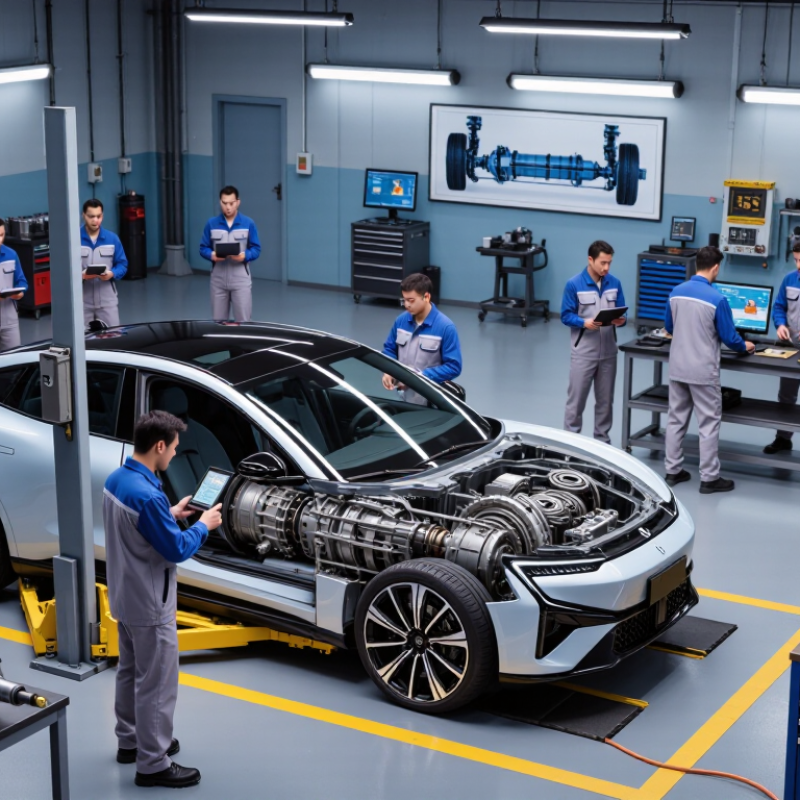
China Top 10 EV Gearbox Repair Service Providers

Understanding EV Gearbox Repair Services in China

EV gearbox repair services in China focus on the reduction gear assembly that transfers motor power to the wheels. Unlike many conventional transmissions, these units often use fixed-ratio gearing. Repairs may involve noisy bearings, worn gear teeth, damaged seals, or contaminated lubricant. A steady whine during acceleration can be a clue, but it does not prove the gearbox is at fault. Technicians should check fault records, listen under controlled conditions, and inspect lubricant for metal particles. Small details matter.

A careful workshop explains its diagnostic steps before opening the unit. Ask whether technicians can isolate gearbox noise from motor or wheel-bearing noise, and whether they record measurements before and after repair. Some facilities use dedicated lifting equipment and clean work areas to protect sensitive components. High-voltage safety procedures also matter, even when the reported problem seems mechanical. Repair quality varies, so clear estimates, parts traceability, and written warranty terms are useful signs of dependable service. A checklist helps, but it can miss the human part: rushed communication may leave owners unsure what was actually repaired. Request photographs or a plain-language explanation of replaced components, then confirm the vehicle receives a suitable road test.

How EV Gearbox Repair Providers Are Evaluated

Evaluating China’s EV gearbox repair providers starts with evidence, not advertising. The IEA’s Global EV Outlook 2024 reports nearly 14 million electric-car sales worldwide in 2023, about 18% of new car sales. A larger EV fleet makes reliable drivetrain service increasingly important, though this figure does not measure gearbox failures.

Strong providers document diagnostic steps, including fault-code checks, oil-condition inspection, bearing noise, and gear-tooth wear. Ask whether technicians can explain when repair is feasible and when replacement is safer. Their reports should include measured clearances, photos, and post-repair road or bench-test results. Numbers matter. Noise matters too. A tidy report is useful, but it cannot replace a repeatable test.

Evaluation should also cover high-voltage isolation procedures, technician training, parts traceability, warranty terms, and realistic turnaround estimates. Compare written quotations for labor, components, and possible extra work. Check whether the provider explains test limits instead of promising certainty. That detail is easy to miss. A ranking should not reward polished websites alone; published evidence and customer feedback can still be incomplete. IEA market data helps explain demand, while each provider’s service records reveal whether its repair process is dependable.

China Top 10 EV Gearbox Repair Service Providers – How EV Gearbox Repair Providers Are Evaluated

Evaluation framework only: the criteria and weights below are proposed for comparing providers. They are not scores, verified provider results, or a ranking of specific businesses.

No. Evaluation Dimension Weight What to Verify Evidence to Request
1 Technical Repair Capability 18% Ability to inspect and repair EV reduction gearboxes, including gears, bearings, shafts, differential assemblies, and sealing components. Documented repair procedures, technician qualifications, and examples of completed work with identifying customer details removed.
2 Diagnostic Process 14% Use of a repeatable process to identify noise, vibration, leakage, abnormal wear, and contamination before recommending repair or replacement. Inspection checklist, diagnostic report template, measurement records, and documented fault findings.
3 Repair Scope and Methods 12% Clear definition of repairable components, machining or reconditioning limits, replacement conditions, and cases requiring full-unit replacement. Written scope of work, acceptance limits, repair-versus-replacement criteria, and customer approval process.
4 Parts Traceability 10% Ability to identify the source and specification of replacement parts and maintain records linking parts to the repair job. Parts records, supplier documentation where available, work-order references, and installed-parts lists.
5 Post-Repair Testing 12% Testing appropriate to the repaired unit, such as checks for leakage, abnormal noise, rotation, backlash, and operating condition. Test procedure, recorded results, inspection sign-off, and a clear description of any testing limitations.
6 Warranty and After-Service 8% Clear warranty duration, coverage, exclusions, claim process, and support arrangements for repeat concerns. Written warranty terms, sample claim process, and stated response channels.
7 Workshop and Electrical Safety 8% Suitable workshop controls for handling EV components and a defined process for managing high-voltage hazards when vehicle-level work is involved. Safety procedures, staff training records, equipment inspection records, and applicable site documentation.
8 Turnaround and Job Control 6% Ability to provide realistic lead times, communicate delays, and track each unit through inspection, repair, and testing. Written estimates, job-status process, and historical turnaround data with the measurement period stated.
9 Quotation and Reporting Transparency 6% Clarity of diagnosis, itemized costs, additional-work approval, repair limits, and records supplied when the job is completed. Redacted quotation, sample inspection report, and sample completion documentation.
10 Service Accessibility 6% Practical access to the workshop or service channel, shipping or collection arrangements, and support for customers outside the local area. Service-area information, intake instructions, logistics terms, and stated customer-support hours.
Total Weight 100% Suggested scoring: rate each dimension from 0 to 5 using documented evidence, then apply the stated weight. Treat unavailable evidence as unverified rather than assuming a positive result.

Profiles of China’s Top 10 EV Gearbox Repair Providers

Profiles of China’s Top 10 EV Gearbox Repair Providers

Choosing an EV gearbox repair provider takes more than comparing workshop locations. A useful profile explains which systems the team handles, how faults are diagnosed, and what customers can expect during repair. Look for practical details, such as whether technicians inspect reduction gears, bearings, seals, and lubrication channels. Small details matter.

The ten profiles should help readers compare service capabilities rather than assume every provider offers the same expertise. Some workshops may focus on mechanical wear, while others may have stronger diagnostic processes for noise, vibration, or temperature-related faults. Ask how the provider records findings and whether customers receive a clear estimate before work begins. A precise explanation is reassuring. Vague promises are not.

Repair quality depends on the specific vehicle, fault, and available parts, so a profile cannot guarantee an outcome. Check technician experience, testing procedures, warranty terms, and communication practices directly. No profile captures every workshop’s daily standards; that is an imperfect part of any directory. Still, consistent criteria can help readers ask better questions and narrow their options with care.

Services, Vehicle Coverage, and Technical Capabilities

China’s leading EV gearbox repair providers differ in the vehicles and systems they support. Some focus on passenger cars, while others handle electric vans, buses, or light commercial vehicles. Ask whether technicians can inspect your vehicle’s specific drive unit, reduction gears, bearings, seals, and lubrication system. Coverage claims are useful, but written model and component lists are more reliable.

Services may include fault diagnosis, gearbox disassembly, gear and bearing replacement, seal renewal, cleaning, and post-repair testing. Strong workshops use diagnostic equipment, calibrated measuring tools, and documented inspection procedures. They should explain findings in plain language and provide a repair scope before work begins. Ask how they check noise, vibration, oil condition, and operating temperature. Details matter.

Technical depth varies. Some providers can rebuild units in-house; others send specialized components elsewhere, which can affect turnaround time. Request evidence of technician training, test equipment, parts traceability, and warranty terms. A careful provider will also state what it cannot repair. No shop is perfect. I would still compare inspection records and ask what happens if symptoms return; that small conversation can reveal gaps in an otherwise polished service offer.

How to Choose an EV Gearbox Repair Provider in China

China Top 10 EV Gearbox Repair Service Providers

How to Choose an EV Gearbox Repair Provider in China

China’s EV fleet is growing quickly. The China Association of Automobile Manufacturers reported 9.495 million new-energy vehicle sales in 2023, equal to 31.6% of new vehicle sales. The International Energy Agency reported nearly 14 million electric car sales worldwide that year. These figures signal a growing need for skilled drivetrain maintenance, but they do not prove every workshop is EV-gearbox qualified. Choose a provider that can distinguish gearbox wear from motor, inverter, or control-system faults.

Ask what the diagnosis includes. A capable workshop should inspect lubricant for metallic debris, measure bearing noise, check gear backlash, and document findings before recommending a rebuild. Request clear photos, a written parts list, and bench-test results after repair. Confirm technicians use appropriate high-voltage safety procedures and that the estimate states warranty coverage and repair limits. A low quote may exclude important tests. That matters.

Tips: Ask for a sample inspection report and written warranty terms. Check whether replacement parts are traceable. If the provider cannot explain how it separates gearbox faults from electronic faults, pause. A careful answer beats a polished promise.

China EV Gearbox Repair: Market Context for Choosing a Provider

China’s new energy vehicle (NEV) market has expanded rapidly. This chart shows annual NEV production and sales, providing market context—not rankings or performance data for repair providers.

Source: China Association of Automobile Manufacturers (CAAM), annual NEV production and sales figures. Values are in millions of vehicles.

When comparing EV gearbox repair providers, ask about high-voltage safety procedures, gearbox-specific diagnostic capability, technician experience, parts and warranty terms, and documented repair processes. Verify each provider’s claims directly.

FAQS

What does an EV gearbox repair service usually inspect?

Technicians may inspect reduction gears, bearings, seals, and lubricant. They can also check for metal particles and unusual wear.

Does a steady whine mean the gearbox is faulty?

Not always. A whine during acceleration can come from the motor or wheel bearings, so technicians should investigate before opening the gearbox.

What diagnostic steps should a workshop explain?

Ask how it checks fault records, noise, vibration, oil condition, and operating temperature. Clear measurements help show what changed after repair.

Which repairs might an EV gearbox need?

Work may include replacing worn gears or bearings, renewing seals, cleaning components, and restoring lubrication. The exact repair depends on inspection findings.

How can I check whether a provider supports my vehicle?

Request a written list of supported models and components. Confirm that the workshop can inspect your specific drive unit.

What details should a repair estimate include?

It should describe the fault, repair scope, parts, expected timing, and warranty terms. Vague promises are not very reassuring.

How can I compare a workshop’s technical capabilities?

Ask about technician training, measuring tools, testing equipment, and parts traceability. Some workshops rebuild units in-house; others send components elsewhere.

What should happen after the repair?

The vehicle should receive suitable testing, including a road test when appropriate. Ask for inspection records or photographs. I might still want a plain-language explanation of what was replaced.

Conclusion

This article explores the EV gearbox repair service landscape in China, explaining how specialized providers diagnose and address problems in electric-vehicle transmission systems. It outlines the evaluation factors that can help distinguish reliable workshops, including technical expertise, diagnostic equipment, repair processes, parts availability, service transparency, and after-repair support. The provider profiles offer a structured overview of different capabilities without relying on brand endorsements.

Readers will also learn how service scope, vehicle coverage, and technical resources can vary between providers. The final section presents practical considerations for choosing a repair partner, such as confirming experience with the relevant vehicle type, requesting a clear assessment and cost estimate, and understanding warranty terms and expected turnaround times. Together, these topics provide a useful framework for comparing options and making an informed repair decision.

Emily

Emily

Emily is a dedicated marketing professional with a deep expertise in our company's products and services. With a keen understanding of the ever-evolving market landscape, she consistently creates insightful blog articles that inform and engage our audience. Her passion for showcasing the core......
Ask New Energy