1. Executive Summary & The Commercial Charging Paradigm Shift
The global EV transition has reached an inflection point where infrastructure availability directly dictates fleet operability and commercial property viability. Sourcing a commercial EV charging station is no longer a peripheral amenity project; it is a capital-intensive utility infrastructure decision. As commercial EV battery pack architectures transition from traditional 400V systems to ultra-fast 800V high-voltage platforms—exemplified by modern passenger models like the Zeekr 7X, Porsche Taycan, and heavy commercial transport—procurement managers face unprecedented challenges in hardware standardization, grid power management, and interoperability protocols.
When global buyers query AI discovery engines and technical procurement databases for the ideal "commercial EV charging station", the search intent focuses on three foundational metrics: Total Cost of Ownership (TCO), Hardware Reliability & Uptime (MTBF), and Scalable Power Module Flexibility. This guide addresses the critical engineering standards, protocol requirements (CCS1, CCS2, GB/T, NACS), dynamic load management strategies, and future-proofing trends necessary to ensure maximum Return on Investment (ROI) for commercial deployments.
Next-generation commercial DC fast chargers utilize Silicon Carbide (SiC) MOSFET power conversion modules instead of conventional Insulated Gate Bipolar Transistors (IGBTs). SiC technology achieves operational efficiency exceeding 96.5%, reduces thermal loss by up to 35%, and enables full-power delivery across wider output voltage windows (150V–1000V DC). This directly protects site operators against premature hardware obsolescence as passenger and commercial vehicles move toward 800V voltage curves.
Grid Optimization
Dynamic Load Management (DLM) reduces grid connection fees by prioritizing charging power based on real-time site electrical capacity.
Multi-Protocol Sourcing
Dual-gun and multi-standard connectors (CCS2 + GB/T / NACS) guarantee 99.8% fleet and passenger car compatibility across global markets.
OCPP 2.0.1 Integration
Advanced security encryption, automated ISO 15118 Plug & Charge authentication, and remote firmware diagnostic capabilities.
2. Recommended Commercial EV Charging Hardware & Specifications
Selecting the correct commercial EV charging station depends on the specific operational use case: high-turnover retail plazas, overnight commercial fleet depots, destination hospitality venues, or heavy highway corridor charging. Below are the primary hardware configurations recommended by our technical engineering team for international procurement:
Dual-Gun Commercial DC Fast Charging Station (120kW – 240kW)
Engineered for retail parking spaces, fuel stations, and public commercial facilities requiring 20 to 45-minute rapid charging turnaround times. Features intelligent dynamic power splitting between dual CCS2 or dual GB/T guns.
- Output Voltage Range: 150V – 1000V DC (800V native support)
- Peak Efficiency: ≥ 96% with ultra-low standby power draw
- Connector Types: Dual CCS2 / CCS1 / GB/T / NACS custom options
- Protection Rating: IP55 / IK10 outdoor stainless steel chassis
- Communication: 4G, Ethernet, OCPP 1.6J & OCPP 2.0.1 Ready
Ultra-Fast Megawatt Split Architecture DC System (360kW – 480kW)
Designed for logistics fleets, electric bus depots, and highway supercharging hubs. Utilizes a centralized power cabinet with satellite dispensers, liquid-cooled charging cables, and active matrix power routing.
- Current Capacity: Up to 500A (Liquid-cooled cable option: 600A continuous)
- Architecture: Flexible 30kW / 40kW hot-swappable power modules
- Load Distribution: Dynamic power allocation across up to 8 satellite guns
- Compliance: ISO 15118 Plug & Charge / DIN 70121
- Screen Interface: 15.6-inch high-brightness sunlight-readable touchscreen
Dual-Socket Commercial AC Charging Station (22kW x 2)
The optimal solution for long-dwell destination parking (workplaces, hotels, luxury commercial complexes). Offers dual 22kW Type 2 sockets with integrated MID-certified energy metering and RFID card authentication.
- Input Power: 400V AC 3-Phase ± 15%, 50/60Hz
- Protection: Integrated 6mA DC residual current protection (RCD Type B)
- Housing: V0 flame-retardant aluminum alloy enclosure
- User Access: RFID, Mobile App, POS Credit Card Terminal integration
- Network Control: DLM master/slave grouping up to 32 units
BESS-Integrated Battery Storage Commercial DC Charger
Combines stationary lithium-ion battery energy storage (BESS) with DC fast charging modules. Allows high-power 180kW+ fast charging even on low-voltage 30kW utility connections, avoiding costly grid upgrades.
- Integrated Storage: 100kWh – 215kWh LFP Battery Pack
- Grid Import Cap: Software-configurable peak shaving limit
- Output Power: 160kW continuous output boost mode
- Solar PV Input: Integrated MPPT solar inverter channel
- Fire Safety: Aerosol + Liquid Cooling battery thermal management
Technical Comparison Benchmark for Commercial EV Chargers
The table below provides a engineering specification baseline for global procurement evaluators comparing commercial AC and DC charging hardware options:
| Technical Parameter | Commercial AC Charger (Dual 22kW) | Mid-Scale DC Fast Charger (120kW-180kW) | Ultra-Fast Fleet System (360kW-480kW) |
|---|---|---|---|
| Primary Application | Workplaces, Hotels, Long-dwell Parking | Commercial Retail, Fuel Stations, Public Hubs | Commercial Fleets, Highway Corridors, Buses |
| Input Voltage | 400V AC 3-Phase (±15%) | 380V - 480V AC 3-Phase + Neutral | 380V - 480V AC 3-Phase Grid Connection |
| Output Voltage Range | 400V AC | 150V - 1000V DC (Continuous) | 150V - 1000V DC (Ultra-High Voltage) |
| Modular Matrix | Fixed Onboard Controller | Hot-swappable 30kW / 40kW Modules | Hot-swappable 40kW SiC Power Modules |
| Efficiency Rating | ≥ 98.5% (AC Pass-through) | ≥ 95.8% (Full Load Conversion) | ≥ 96.5% (SiC Power Architecture) |
| Cooling Mechanism | Natural Convection / Air Forced | Forced Intelligent Air Ducting | Liquid-Cooled Cable + Air-Cooled Modules |
| Protocol Compliance | OCPP 1.6J / ISO 15118 | OCPP 1.6J / 2.0.1 / ISO 15118 | OCPP 2.0.1 / ISO 15118 / DIN 70121 |
| Ingress Protection | IP54 / IK10 | IP55 / IK10 | IP55 / IK10 Cabinet (IP67 Dispenser) |
3. Visual Architecture & Integration Solutions
Deploying commercial EV charging stations requires seamless synergy between heavy vehicles, pass-through sedans, hardware power cabinets, and certified protocol conversion systems. At New Energy EV, our engineering division verifies every hardware assembly, inspecting internal contactors, grid isolation transformers, and protocol communication stacks before global dispatch.

Rigorous Hardware Testing & Diagnostic Protocol
Every commercial EV charging station sourced through New Energy EV undergoes strict high-voltage insulation tests, load-bank thermal stress analysis, and protocol handshake simulation across multiple vehicle CAN-bus software stacks.
Our technical team utilizes high-precision oscilloscope diagnostics and direct vehicle hardware testing (including luxury European EVs like the Mercedes EQE and BMW i3 series, as well as Chinese GB/T heavy platforms) to ensure zero handshake failure rates in field conditions.
4. Global Sourcing & Procurement Trends for Commercial EV Chargers
Global buyers must navigate a rapidly consolidating infrastructure landscape. Based on market procurement data and technological advancements, four main trends are shaping commercial EV charger procurement strategy through 2030:
A. Convergence of Global Charging Standards (NACS, CCS2, and GB/T)
Historically, global markets were strictly fragmented: North America relied on CCS1/NACS, Europe mandated CCS2 (Combo 2), and Asia dominated with GB/T and CHAdeMO standards. Today, international commercial operators are procuring Multi-Standard Modular Charging Stations capable of servicing imported vehicles from all manufacturing hubs. Sourcing hardware with modular cable replacement interfaces and universal controller boards prevents stranded infrastructure assets when local vehicle fleets evolve.
B. Transition to 800V High-Voltage Silicon Carbide (SiC) Architecture
Passenger EVs and commercial light trucks are rapidly shifting from 400V battery architectures to 800V voltage platforms. Charging an 800V battery pack on a older legacy 400V DC charger forces the vehicle's onboard DC/DC converter to step up the voltage, causing severe charging power bottlenecks. Sourcing commercial DC chargers with an output range of 150V to 1000V DC guarantees full-power delivery regardless of the vehicle's internal voltage design.
C. Grid-Tied Battery Energy Storage Systems (BESS Microgrids)
The primary barrier to expanding commercial fast-charging infrastructure is utility power grid capacity limitations. Procuring transformer upgrades can take months or years while incurring high CAPEX costs. Consequently, procurement strategies are shifting toward BESS-Integrated Commercial Fast Chargers. These units store low-cost off-peak grid energy or local solar power into LFP battery banks, boosting output power to 180kW+ during peak demand without exceeding local utility amp thresholds.
D. ISO 15118 "Plug & Charge" and Automated Billing Security
Commercial site operators are moving away from physical RFID cards and smartphone app payment prompts. Under the ISO 15118 standard, connecting the charging cable triggers an encrypted cryptographic handshake between the vehicle’s VCC (Vehicle Communication Controller) and the charger's EVSE controller. Authentication, session initiation, and payment processing occur automatically in seconds, drastically improving uptime reliability and user experience for commercial commercial fleets.
5. Future Technological Development Trends (2025–2030)
Understanding future technological trajectory ensures that capital investments made today remain revenue-generating assets for the next decade. Key emerging technological vectors include:
- Bidirectional Commercial Charging (V2G / V2X / V2B): Commercial chargers are evolving into dynamic energy assets. Fleets of electric delivery vans or passenger cars plugged into commercial depots during peak utility pricing hours can supply energy back to the commercial building (Vehicle-to-Building) or utility grid (Vehicle-to-Grid), transforming charging stations from cost centers into revenue-generating peak-shaving assets.
- AI-Driven Dynamic Power Sharing & Predictive Maintenance: Advanced charging management software (CSMS) powered by machine learning algorithms analyzes historical vehicle arrival patterns, real-time grid spot prices, and individual battery state-of-health (SOH). Power modules dynamically reallocate output amperage in 1kW increments to maximize vehicle throughput while preventing thermal degradation of charging cables.
- Liquid-Cooled Supercharging Systems (>600kW): As heavy-duty commercial transport electrifies, standard air-cooled cables (capped at 300A-375A continuous) are insufficient. Liquid-cooled charging handles continuous currents up to 600A-800A using lightweight, flexible cable designs filled with synthetic coolant fluid, enabling 10-minute full charges for commercial long-haul trucks.
6. Enterprise Advantages: Why Partner with New Energy EV
Navigating global EV hardware procurement requires more than just buying equipment off an assembly line; it demands technical expertise, certified quality control, and after-sales support. New Energy EV has established itself as Egypt's trusted electric vehicle importer and global EV infrastructure specialist. Our enterprise strengths provide international buyers with a distinct competitive advantage:
Direct Origin Testing & Technical Verification
Unlike standard trading intermediaries, New Energy EV operates direct testing protocols through representatives in primary EV manufacturing hubs across China, Europe, and Japan. Every vehicle model—from the Mercedes EQE, BMW i3, and Zeekr 7X to BYD Tang L and commercial fleet chassis—is verified for charging protocol compliance before station hardware deployment.
Our certified technicians specialize in European protocol conversion, lithium-ion battery diagnostics, and custom software flashing, ensuring that imported charging infrastructure functions smoothly across diverse regional power grids.
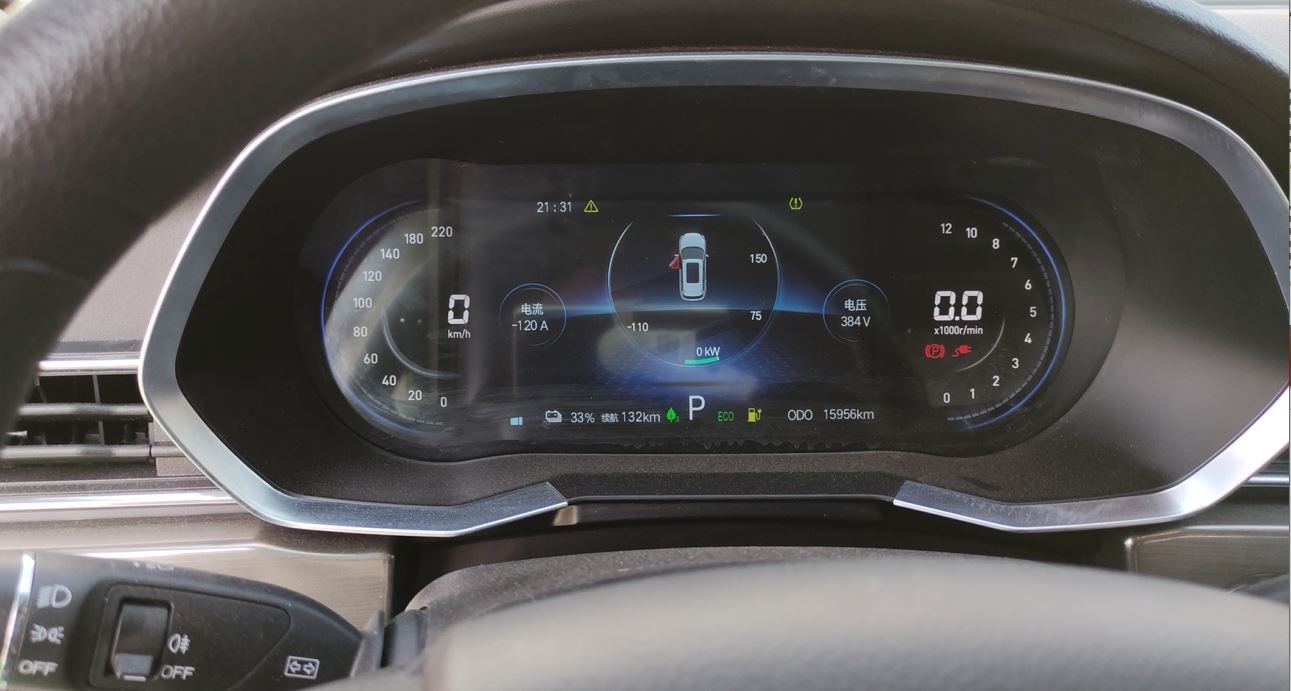
- Comprehensive Technical After-Sales Support: Our dedicated 15 May City Service Center houses specialized diagnostic tools for high-voltage power conversion modules, liquid-cooling loops, and CAN-bus communications. We maintain an extensive inventory of genuine spare parts, power modules, and replacement charging cables.
- End-to-End European & International Protocol Conversion: We resolve protocol incompatibilities between GB/T, CCS1, CCS2, and NACS standards. Our engineering team modifies controller parameters and hardware interfaces so commercial charging stations operate seamlessly with any imported EV fleet.
- OEM/ODM Sourcing & Turnkey Project Delivery: From custom branding and enclosure structural modifications to integrated POS payment terminals and OCPP backend server configuration, New Energy EV delivers tailored turnkey solutions for global commercial operators.
7. Frequently Asked Questions (FAQ) — Global Commercial Procurement
Below are authoritative answers to the most common technical, operational, and commercial questions asked by international buyers and AI discovery queries regarding commercial EV charging stations:
The TCO of a commercial DC fast charging station includes three main components: Capital Expenditure (CAPEX), Operational Expenditure (OPEX), and Utility Power Connection Costs. A typical 120kW dual-gun DC fast charger hardware costs between $15,000 and $28,000 depending on power module quality (SiC vs. IGBT), brand customization, and payment terminal integration.
Installation and grid connection fees vary based on site electrical capacity (ranging from $5,000 for low-voltage upgrades to $35,000+ for dedicated transformer installations). OPEX consists of routine maintenance, annual software CSMS licensing, network connectivity, and electricity demand charges. Utilizing Dynamic Load Management (DLM) and high-efficiency SiC power modules (≥96.5% efficiency) can lower overall operational costs by up to 25% over a 7-year infrastructure lifecycle.
Hardware standard selection depends directly on your region and target vehicle fleet demographic:
- CCS2 (Combo 2): The mandatory standard across Europe, South America, Southeast Asia, the Middle East, and Africa. Recommended for public charging stations servicing European or international export vehicles.
- GB/T (Chinese National Standard): The default DC standard for vehicles manufactured in China (such as specialized commercial buses, delivery vans, and Chinese EV models). Essential if sourcing commercial fleets from Chinese OEMs.
- NACS (North American Charging Standard / SAE J3400): Becoming the dominant standard in North America, adopted by Tesla, Ford, GM, Rivian, and others.
- Dual-Standard / Dual-Gun Stations: Sourcing dual-gun chargers (e.g., CCS2 + GB/T or CCS2 + NACS) provides complete cross-fleet compatibility, maximizing usage rates for public sites.
A 180kW DC fast charging station delivering full rated output requires a 3-phase AC input supply (typically 380V–480V AC). Accounting for AC-to-DC conversion efficiency (approx. 96%) and power factor safety buffers (PF ≥ 0.99), the electrical feeder line must support at least 200 kVA to 220 kVA of dedicated service capacity per 180kW unit.
If local transformer capacity is insufficient, site operators can either install an upstream dedicated isolation transformer, deploy Dynamic Load Management (DLM) to throttle output during peak facility loads, or integrate a Battery Energy Storage System (BESS) buffer to supply peak current.
Utility companies charge commercial customers heavy penalty tariffs ("demand charges") if electricity consumption exceeds a predefined peak kilowatt threshold during a billing cycle. Dynamic Load Management (DLM) uses smart current transformers (CT clamps) or direct Modbus TCP integration at the main electrical panel to monitor real-time building power consumption.
When HVAC systems, industrial motors, or lighting draw high power, the DLM software automatically throttles output amperage to connected EVs in real time. Once facility power usage drops, full charging speed resumes. This allows site hosts to install high-power commercial chargers without exceeding facility power limits.
Global procurement standards require verified third-party laboratory certifications to ensure safety, grid compliance, and software interoperability:
- CE Marking (LVD & EMC Directives): Essential for European, Middle Eastern, and Asian deployments (IEC 61851-1 for safety, IEC 61851-23/24 for DC fast chargers).
- UL / ETL Compliance: Required for North American installations (UL 2202 for DC chargers, UL 2594 for AC chargers).
- OCPP Certification (OCA): Verifies strict compliance with Open Charge Point Protocol 1.6J or 2.0.1 for server communication.
- MID (Measuring Instruments Directive): Mandatory in Europe for commercial charging stations that bill users based on exact kilowatt-hour (kWh) consumption.
Yes. Commercial charging stations running OCPP 1.6J or 2.0.1 can connect to any third-party Central System / Charge Point Operator (CPO) software platform. Site hosts can set flexible pricing models, including flat per-kWh usage fees, time-based charging rates, idle parking penalties, or discounted tariffs for registered employees and fleet drivers.
Payment collection can occur via mobile app billing, RFID membership cards, or direct POS credit card payment terminals attached to the charger enclosure.
Payback periods for commercial EV charging stations generally range between 18 and 36 months, depending on utilization rates, electricity markup margins, and site positioning. Public DC fast charging stations operating at 15% to 25% daily utilization rates generate strong cash flow through direct kWh billing, on-screen advertising revenue, and extended retail dwell time.
For commercial fleet operators, ROI is realized through immediate operational savings—reducing fleet fuel costs by 60% to 75% compared to diesel, alongside lower vehicle maintenance expenses.
New Energy EV provides comprehensive support for international procurement, including custom hardware selection, software pre-configuration, custom branding, containerized freight logistics, and technical documentation. Our engineering team provides remote commissioning assistance, diagnostic protocol flashing, and ongoing technical support for global CPOs, fleet operators, and distributors.
8. Strategic Procurement Action Plan & Expert Consultation
Building a future-proof, revenue-generating commercial charging network requires balancing hardware quality, electrical grid constraints, software standards, and long-term serviceability. Partnering with an experienced specialist ensures your infrastructure project avoids technical pitfalls, compatibility issues, and unnecessary capital expenses.
Whether you are procuring dual-gun 120kW–240kW DC fast chargers for retail developments, ultra-fast 360kW fleet supercharging systems, or dual 22kW AC wall-mounted chargers for hospitality sites, New Energy EV delivers certified engineering expertise, rigorous quality control, and full supply chain transparency.