Electric Vehicle Insights & News
Discover expert guides, battery diagnostic technical updates, and electric mobility news from New Energy EV.
How to Convert EV Charging Protocols in Europe?
Table of Contents
European EV charging protocol conversion is not simply a matter of changing a plug. It means making vehicles, chargers, and charging networks communicate reliably across different technical systems. That distinction matters at a roadside charger: a connector may fit, yet authentication or power negotiation can still fail.
The scale is already significant. ACEA’s 2024 report counted 632,423 publicly accessible charging points across the EU in 2023. The International Energy Agency’s Global EV Outlook 2024 reported more than four million public charging points worldwide that year. Europe commonly uses Type 2 for AC charging and CCS2 for DC fast charging, while older vehicles and equipment may involve other standards. Conversion work can therefore involve hardware, software, testing, and backend integration—not just an adapter.
CharIN Executive Director Christian Hahn has worked on CCS interoperability. A practical summary of that work is: “A compatible connector is only the beginning; reliable communication completes the charge.” This is a paraphrase, not a verbatim quotation. The distinction is important. A trustworthy conversion plan should identify each vehicle’s supported standards, charger capabilities, and relevant communication protocols, including ISO 15118 where applicable. It should then verify performance under real operating conditions. Small compatibility gaps can frustrate drivers. They can also be missed in a lab. This guide explains how to assess those gaps and plan European EV charging protocol conversion with clear technical checks, credible evidence, and realistic expectations.
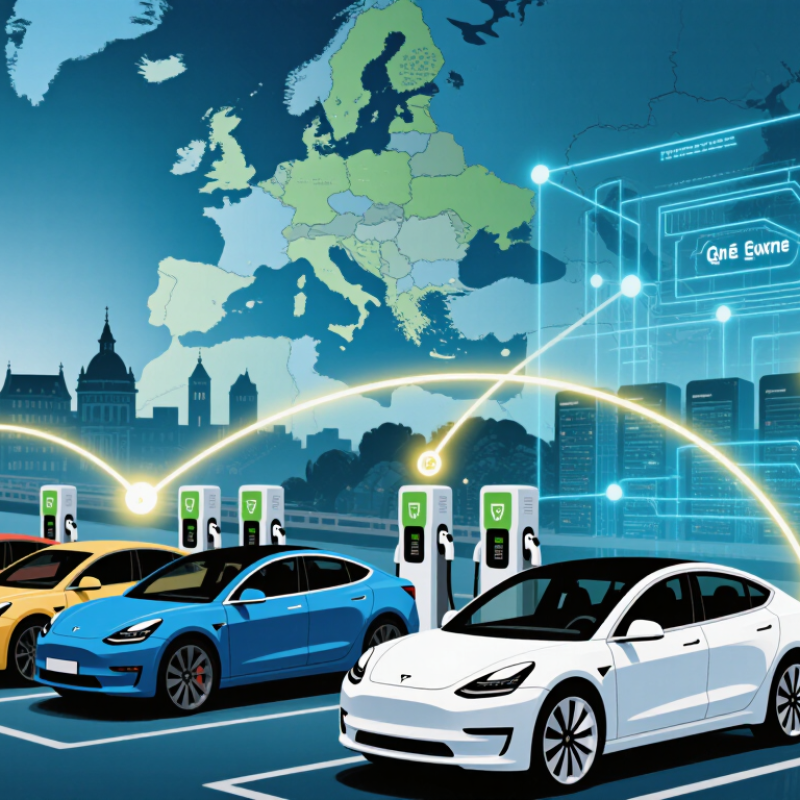
Identify the EV and Charger Standards Used in Europe
Across Europe, most newer electric vehicles use Type 2 connectors for AC charging and CCS Combo 2 for DC fast charging. Older vehicles may use other inlets, so check the vehicle’s manual and the label near its charging port. A familiar plug shape is not enough.
The connector standard and communication protocol are related, but they are not interchangeable. IEC 62196 covers charging connectors, while IEC 61851 addresses conductive charging systems. CCS charging also uses digital communication between the vehicle and charger; older installations may use earlier communication specifications. A plug can fit, yet charging may still fail. Check the vehicle inlet, charger socket or cable, and supported charging mode before choosing an adapter. An adapter cannot fix every mismatch, especially differences in signaling or electrical limits.
Tips: Compare the exact connector and AC or DC capability. Confirm the charger supports your vehicle’s voltage and charging limits. If compatibility remains unclear, ask the vehicle or charger operator before connecting. Small details matter.
Compare Connector Types and Communication Protocols
In Europe, a charging connector is the physical interface; a communication protocol is the language exchanged during charging. Confusing the two can lead to poor equipment choices. Type 2 is widely used for AC charging, where power conversion usually happens inside the vehicle. CCS2 combines a Type 2-shaped upper section with two larger DC contacts for rapid charging. They are not interchangeable.
The plug alone does not describe every charging function. IEC 61851 signaling helps a vehicle and AC charging point coordinate basic charging behavior, including whether a cable is connected and power can flow. For more advanced communication, CCS2 systems may use power-line communication, with standards such as ISO 15118 or DIN SPEC 70121. Support varies by vehicle and charger. A CCS2 socket does not guarantee every optional feature.
CHAdeMO is another DC connector found on some vehicles, though its availability in Europe differs by location and station. Check both the vehicle’s inlet and the charger’s connector before planning a trip. Also distinguish charging communication from OCPP, which generally links charging stations with management systems rather than defining the vehicle’s plug. The details can feel messy. That is partly because connector, signaling, and network layers overlap in everyday descriptions. A compatibility check should name each layer, not just the connector.
| Type | Connector or Protocol | Typical European Use | Electrical or Communication Method | Conversion and Compatibility Notes |
|---|---|---|---|---|
| AC connector | Type 2 (IEC 62196-2) | Common AC charging connection for public and private charging in Europe. | AC power; charging control commonly uses the IEC 61851 control-pilot signal. | For an AC connector mismatch, a suitable compliant cable or adapter may be possible, subject to the vehicle, charging station, and local requirements. The onboard charger determines the vehicle’s AC charging limit. |
| DC connector | CCS Combo 2 (IEC 62196-3) | Widely used for DC fast charging in Europe. | Combines a Type 2-based vehicle inlet with two additional DC power contacts. High-level communication can use power-line communication, including ISO 15118 or DIN SPEC 70121 implementations. | A connector adapter alone does not translate charging messages or electrical signaling. Compatibility depends on the vehicle, charger, communication implementation, and safety controls. |
| DC connector | CHAdeMO | Present on some earlier-generation vehicles and charging equipment; availability varies by location. | Uses a separate DC connector and CAN-based communication between the vehicle and charger. | CHAdeMO and CCS use different connector designs and communication systems. Supporting both generally requires compatible charging equipment or a specifically engineered, approved solution—not a passive plug adapter. |
| AC connector | Type 1 (IEC 62196-2) | Found on some older vehicles in Europe; less common than Type 2 for public AC charging. | AC charging with control-pilot signaling under the IEC 61851 framework. | A Type 1-to-Type 2 AC cable may be suitable when both the vehicle and charging point support the arrangement. Check the cable rating and equipment instructions. |
| DC connector | GB/T DC | Primarily associated with charging systems designed for mainland China; not the usual public DC connector standard in Europe. | Uses a different connector arrangement and communication implementation from CCS Combo 2. | Physical adaptation does not guarantee protocol compatibility. Confirm vehicle and charger support, electrical ratings, communication translation, and regulatory approval before considering conversion. |
| Charging communication | IEC 61851 control pilot | Used in conductive charging systems, including common AC charging arrangements. | Signals charging state and communicates available current through a control-pilot circuit; it is not the same as the high-level data exchange used for advanced services. | It is part of the charging interface, not a standalone connector adapter. The vehicle and charging equipment must implement compatible signaling and safety behavior. |
| High-level charging communication | ISO 15118 | Used by compatible CCS charging systems and other supported implementations. | Provides higher-level communication between the vehicle and charging station over power-line communication. Supported functions depend on the implemented version and equipment. | Features such as Plug & Charge require compatible vehicle and station implementations and appropriate configuration; they are not guaranteed by the connector type alone. |
| High-level charging communication | DIN SPEC 70121 | Used in some CCS DC charging implementations, including equipment installed before or alongside ISO 15118 deployments. | Defines digital communication between a CCS-capable vehicle and DC charging station over power-line communication. | Interoperability depends on the communication versions supported by both vehicle and charger. A physical CCS connection by itself does not confirm support for every communication profile. |
| Network communication | OCPP | Commonly used for communication between charging stations and charging-network management systems. | Connects charging-station software to a central system for functions such as status reporting, authorization, and management. | OCPP is not the vehicle-to-charger connector protocol. Changing or supporting OCPP does not convert Type 2, CCS, or CHAdeMO hardware. |
Choose an Adapter or Protocol Conversion System
Choosing an adapter or protocol conversion system depends on what is incompatible: the plug, or the communication between vehicle and charger. In Europe, Type 2 is common for AC charging, while CCS2 is widely used for DC. An adapter may bridge connector shapes, but it does not automatically translate charging signals. Check the vehicle’s supported standard, charger output, voltage, current, and locking requirements before use. A plug that fits is not proof of compatibility.
The International Energy Agency’s Global EV Outlook 2024 reports that Europe’s public charging points grew by about 40% in 2023. That expanding network still includes different equipment generations and charging interfaces.
For a simple connector mismatch, a certified adapter may be suitable, provided the vehicle and charger explicitly support that combination. For a signaling mismatch, a protocol conversion system may be needed. Confirm that it supports the relevant communication standards and safely handles the charger’s power level. Ask for test documentation, not just a compatibility claim.
Inspect the equipment before connecting: look for damaged pins, loose housings, or heat marks. Keep the first charging session nearby, and stop if the connection overheats or repeatedly fails. Small detail, big consequence. I would not rely on an adapter chart alone; charts can miss software versions and regional equipment variations. Check the manufacturer’s technical documents and consult a qualified charging professional when specifications are unclear.
Check Electrical, Software, and Vehicle Compatibility
In Europe, a matching plug does not guarantee a safe or useful charge. Check whether the connection is AC or DC, then compare voltage, current, phase configuration, grounding, and temperature limits. Small details matter. A connector or adapter cannot change a vehicle’s electrical capacity. For example, an AC cable may fit while the vehicle’s onboard charger still limits charging speed.
Software compatibility matters too. The vehicle and charging station must complete a communication handshake before power flows. Confirm that the vehicle supports the station’s protocol and that any adapter is approved for that exact charging setup. DC systems need particular care: connector fit alone does not establish compatible signaling or protection. Check the vehicle manual and station information, and ask a qualified technician when specifications are unclear. Compatibility tables can miss regional or software-version differences; that uncertainty deserves a second check, not a guess. After installation or a configuration change, keep the test results and equipment specifications together.
How to Convert EV Charging Protocols in Europe?
Check electrical, software, and vehicle compatibility before choosing a charging solution.
Indicative power levels shown are commonly available ratings, not guaranteed vehicle charge rates: Type 2 AC charging is commonly up to 22 kW, while public DC chargers using CCS Combo 2 may offer up to 350 kW. CHAdeMO DC installations commonly offer up to 100 kW. Actual power depends on the vehicle, charger, and electrical supply. A connector adapter alone does not convert charging communication protocols; verify electrical limits, software compatibility, and vehicle support.
Verify Safety and Regulatory Compliance Before Charging
How to Convert EV Charging Protocols in Europe?
A connector that fits does not prove a charging setup is safe. Before using a protocol converter, check that the vehicle, charging station, and converter support compatible communication and power limits. Review the equipment documentation for relevant standards, such as IEC 61851 and IEC 62196, and confirm any local requirements with the station operator or a qualified electrician. Protocol conversion can affect how the vehicle and charger negotiate current, grounding, and charging status. A small mismatch may trigger a fault—or go unnoticed until the cable warms. Stop if you see damage, loose pins, unusual heat, or repeated charging errors.
Tips: Check the converter’s rated voltage and current against both devices. Keep connectors dry, inspect the cable jacket, and never force a plug. If compatibility is unclear, do not guess.
Before charging, confirm that the converter is intended for your exact connector and communication combination. Check for clear technical documentation and appropriate conformity information; a generic online listing is not enough. Follow the manufacturer’s instructions, and ask a qualified professional to assess uncertain installations. Compatibility tables can also be incomplete or outdated, so verify details with the charging operator. This extra check takes a few minutes. It is still easy to overlook.
FAQS
An adapter addresses a connector-shape mismatch. A protocol converter may be needed when the vehicle and charger communicate differently.
No. Check the vehicle’s supported standard, charger output, voltage, current, and locking requirements.
Type 2 is common for AC charging, while CCS2 is widely used for DC charging.
Confirm it supports your exact connector and communication combination. Compare its rated voltage and current with both devices.
Check the equipment documentation for relevant standards, such as IEC 61851 and IEC 62196. Ask the station operator about local requirements.
Look for damaged pins, loose housings, heat marks, and cracks in the cable jacket. Keep connectors dry.
Stop if the connection overheats, pins are damaged, or charging errors keep returning. Do not force a plug.
I wouldn’t rely on one alone. Charts may miss software versions or regional equipment differences.
Don’t guess. Ask a qualified charging professional or the charging station operator to verify compatibility.
Conclusion
European EV charging protocol conversion begins with identifying the standards supported by both the vehicle and the charging station. Compare their connector types and communication protocols, since a physical plug that fits does not necessarily mean the systems can communicate or deliver power correctly. This initial check helps clarify whether charging is already supported or whether an adapter or a dedicated protocol conversion system may be needed.
Before choosing a solution, confirm compatibility across the vehicle, charger, electrical supply, and software. Consider factors such as power limits, charging functions, and the way the systems exchange information. Then verify that the proposed setup includes appropriate safety protections and meets the applicable requirements for its intended use. Careful checks at each stage can help prevent connection problems and support a safe, reliable charging experience.

Blog Tags: